

What Are Strip Footings for House Construction
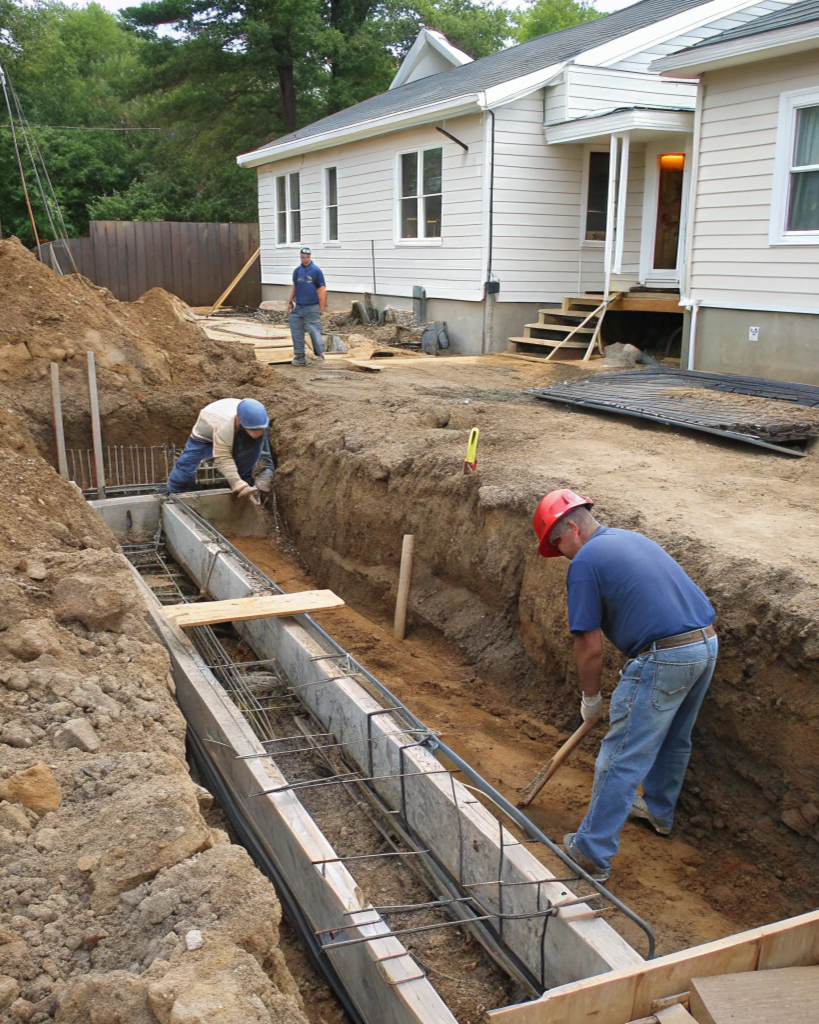
Strip footings are continuous concrete strips that run under your external walls and any load-bearing walls inside the building. They’re the primary foundation system for brick veneer construction and are engineered based on your specific soil classification. The width typically ranges from 400mm to 600mm, depending onthet soil you’re building on, and the depth gets determined by your engineer based on soil reactivity and building loads.
We reinforce strip footings with steel bars – usually N12 or N16 grade – that run continuously through the concrete to give it tensile strength. The whole system’s designed to distribute your building’s weight evenly across the soil and prevent differential settlement, which is when different parts of your building settle at different rates. That’s what causes cracks in walls and structural problems down the track. Properly engineered strip footings eliminate that risk by spreading loads consistently.

New Home Construction Foundations
Strip footings form the primary foundation system for new brick veneer homes across Newcastle. We’re pouring footings that support your external walls and any internal load-bearing walls, all engineered to match your soil classification and building design. The system works by creating continuous concrete beams that distribute your home’s weight evenly across the building footprint.
Your geotechnical report determines what width and depth we’re excavating to. Class A sand near the beaches needs different specifications compared to Class M or H reactive clay soils you’ll find in suburbs like Wallsend or Cameron Park. We’re following your structural engineer’s plans exactly – footing width, reinforcement bar sizing, concrete strength, everything gets specified for your site.
The process runs through council inspection before we pour any concrete. That inspection point confirms your footings match the engineering plans and approves to proceed with your slab. We handle the booking and coordinate timing so your build schedule stays on track from footings through to frame-up.
Strip Footing Applications in Newcastle
We’re installing strip footings for these projects across Newcastle:
| Residential Construction | Commercial & Structural | Engineering Considerations |
|---|---|---|
| New house construction foundations | Commercial building perimeters | Class M and H reactive clay soils |
| Home extensions and additions | Retail and office foundations | Stepped footings for sloping blocks |
| Garage and granny flat footings | Warehouse external walls | Sandstone excavation in hill suburbs |
| Duplex and townhouse developments | Multi-unit residential complexes | Coastal Class A sand foundations |
| Brick veneer wall support | Replacement of deteriorated footings | Load-bearing wall requirements |
Every strip footing we install gets engineered for your specific site conditions. Newcastle’s got everything from reactive clay soils that need wider, deeper footings through to sandstone that requires rock breaking before we can excavate. If you’re building near the coast, you’re likely on Class A sand, which behaves completely different to the Class M and H clays common in western suburbs. We work from your engineer’s specifications to get the width, depth and reinforcement right for your soil classification. Council inspection happens at the footing stage before any concrete gets poured, and we coordinate that timing so your project keeps moving.
Extension and Addition Footings
Extensions and additions need strip footings that match your existing foundation system and handle the new loads you’re adding. We’re excavating and pouring footings that tie into your current house structure while meeting modern engineering standards for the additional building area.
The challenge with extension footings is matching depth and specifications to what’s already there, especially on older homes where original footings might not meet current AS2870 standards. Your engineer designs new footings based on your current soil classification, and we often need to go deeper or wider than the original house footings if you’re on reactive clay soils. Stepped footings come into play if your extension’s on sloping ground.
Council requires engineering certification and inspection for extension footings just like new construction. We coordinate that inspection timing, pour to specifications, and make sure everything ties in properly so your extension performs as one structure with your existing home.

Engineering Specifications for Strip Footings
Strip footing specifications are determined by your structural engineer based on soil classification and building loads. Width typically ranges from 400mm on stable Class A soils up to 600mm or wider on Class H reactive clays. Depth varies from 300mm minimum on non-reactive soils through to 600mm or deeper where you’re dealing with highly reactive clay.
We’re installing N12 or N16 reinforcement bars continuously through the base of your footings. Bar spacing and concrete cover get specified in your engineering plans – usually 75mm cover to protect steel from corrosion. Concrete strength is typically N20 or N25 grade, depending on your engineer’s requirements and the loads being carried.
Newcastle Soil Classifications and Footing Requirements
Newcastle’s diverse soil conditions directly impact how we engineer and install your strip footings. Your geotechnical report classifies soil from Class A through to Class H, and that classification determines footing width, depth, and reinforcement requirements.
Common Newcastle soil classifications:
- Class A: Sand and rock (coastal suburbs, beachside areas)
- Class M: Slightly reactive clay (common across Newcastle region)
- Class H: Highly reactive clay (western suburbs, some Lake Macquarie areas)
- Class E: Moderately reactive clay (scattered throughout the Hunter region)
Class A sand near beaches like Merewether or Bar Beach needs different footing specs compared to the reactive clay soils you’ll find in Wallsend, Cameron Park, or Edgeworth. Class H soils require significantly deeper and wider footings to handle moisture-related soil movement.
Your engineer specifies exact requirements based on your soil report. We’re excavating to those depths, installing reinforcement as designed, and pouring footings that’ll handle your specific soil behavior. Council inspection confirms everything matches your engineering plans before concrete gets poured.
Reinforcement and Concrete Specifications
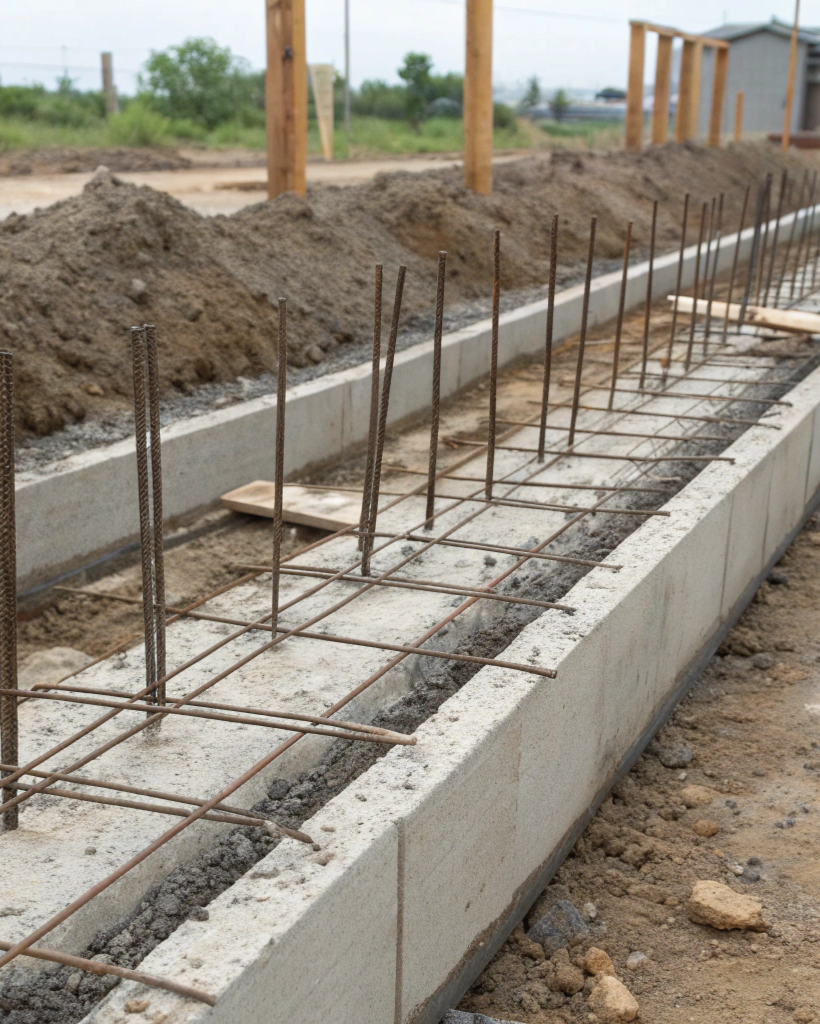
Reinforcement bars in strip footings provide tensile strength that concrete alone can’t handle. We’re installing N12 or N16 grade steel bars continuously through the base of your footings, positioned to maintain a minimum 75mm concrete cover for corrosion protection. Bar spacing gets specified by your engineer – typically one or two bars, depending on footing width and loads.
Concrete strength is N20 or N25 grade for most residential strip footings. Higher grades might get specified for commercial work or where you’re carrying heavier loads. We’re pouring to 300mm minimum depth on stable soils, increasing to 450mm or 600mm on reactive clay,s depending on classification.
Reinforcement needs to run continuously with proper lap lengths where bars join – usually 500mm minimum overlap. Corner bars get bent to maintain continuity around the building perimeter. Every piece of steel gets positioned before inspection happens, and we maintain specified cover throughout the pour so bars stay protected inside the concrete.
Strip Footing Installation Process
We start by reviewing your structural engineer’s plans to confirm footing dimensions, depths, and reinforcement specifications. Site excavation happens to exact depths – varying from 300mm on stable soils up to 600mm or deeper on reactive clays. If you’re on sloping ground, we’re excavating stepped levels that maintain proper depth at each change.
Installation sequence:
- Boxing and formwork are positioned according to the engineer’s width specifications
- Reinforcement bars are placed with correct cover and spacing
- Termite barrier systems are integrated where required
- Council and engineer inspection before concrete pour
- Concrete poured to N20 or N25 grade specifications
- Minimum 7-day curing period before backfill
After curing is complete, we backfill and compact around footings to prevent settlement. The whole process gets coordinated with council inspection timing – they need to sign off at the footing stage before your slab work begins. We handle booking inspections and make sure everything’s ready when the inspector arrives, so your project timeline stays on track from excavation through to slab preparation.
Frequently Asked Questions
Strip footings support external walls and load-bearing internal walls in brick veneer construction. They’re continuous concrete beams that distribute building weight evenly across soil, preventing differential settlement that causes cracks and structural problems in your home or extension.
Depth depends on your soil classification. Class A sand typically needs 300mm minimum depth. Class M reactive clay requires 450mm or deeper. Class H highly reactive clay often needs 600mm or more. Your engineer specifies exact depth based on your geotechnical report.
Yes, the council requires a geotechnical soil report before approving your footing design. The report classifies your soil from Class A to Class H and determines what footing specifications your engineer needs to design to. Can’t get approval without it.
Width ranges from 400mm on stable Class A soils up to 600mm or wider on Class H reactive clays. Your structural engineer determines exact width based on soil classification, building loads, and wall types. Wider footings distribute weight better on reactive soils.
We install N12 or N16 grade steel reinforcement bars continuously through the footing base. Typical residential work uses one or two bars depending on width. Bars maintain 75mm concrete cover for corrosion protection and run continuously with 500mm lap lengths where they join.
Get Your Strip Footing Quote
We’re providing free quotes for strip footing installation across Newcastle, Lake Macquarie, and Maitland construction projects. Our team works from your engineer’s specifications to deliver footings that pass council inspection and give your building the foundation it needs for long-term performance.
Licensed contractors with experience across Newcastle’s varied soil conditions – from coastal sand through to reactive clay soils. Contact us with your building plans and soil report, and we’ll give you accurate pricing for footings engineered specifically for your site. Ready to get your foundations sorted and your project moving forward.
