

Newcastle Shed Slab Service Areas
We pour shed slabs throughout Newcastle, Lake Macquarie, Maitland, and across Hunter region rural properties, where solid concrete bases make the difference between sheds that last and ones that cause problems down the track. Our crews know the local soil conditions from coastal suburbs through to rural acreages, so we adjust our preparation methods based on where your property sits.
From garden sheds in Charlestown and Fletcher through to workshop slabs in Maitland and machinery storage on Hunter Valley farms, we’ve built concrete bases that account for each area’s specific challenges. Properties in Maryland and Wallsend get different drainage considerations than rural blocks near Cessnock or Singleton.
We service residential properties, hobby farms, commercial workshops, and agricultural operations across the region. If you’re putting up a shed anywhere in the greater Newcastle area, we’ll come out for a site assessment and give you a straightforward quote based on your specific requirements.

Why Professional Shed Slabs Matter for Newcastle Properties
Professional shed slabs give you the precision foundation that keeps your shed square, level, and properly anchored for decades of Newcastle weather. We’re talking perfectly flat surfaces within millimetre tolerances, reinforced concrete that handles your loads without cracking, and anchor points positioned exactly where your shed manufacturer specifies them.
A properly poured shed base stops moisture from rising into your stored equipment, prevents the floor from settling unevenly as soil shifts underneath, and gives you a workspace that stays level whether you’re rolling toolboxes around or operating machinery. Newcastle’s clay soils and coastal rainfall make professional preparation even more valuable—we compact and grade the site so water drains away from your slab instead of pooling underneath.
The difference shows up when you’re bolting your shed frame down, and everything lines up perfectly, when your roller door tracks stay true, and when you’re walking on a solid floor that doesn’t crack or move over time.
Types of Sheds We Build Bases For
| Garden & Storage Sheds | Workshop & Trade Sheds | Farm & Rural Sheds |
|---|---|---|
| Compact garden sheds (3x3m to 6x6m) | Professional workshop spaces | Farm machinery storage |
| Bunnings flat-pack sheds | Trade equipment storage | Hay and feed storage sheds |
| Tool and equipment storage | Mechanic workshop slabs | Livestock shelter bases |
| Pool equipment enclosures | Woodworking shop foundations | Tractor and implement sheds |
| Storage container slabs | Home business workshops | Agricultural chemical storage |
We’ll size and reinforce your shed slab based on what you’re storing and how you’re using the space. Garden sheds need different specifications than workshop slabs carrying heavy machinery, or farm sheds housing tractors and equipment.
Anchor Points and Secure Shed Fixing
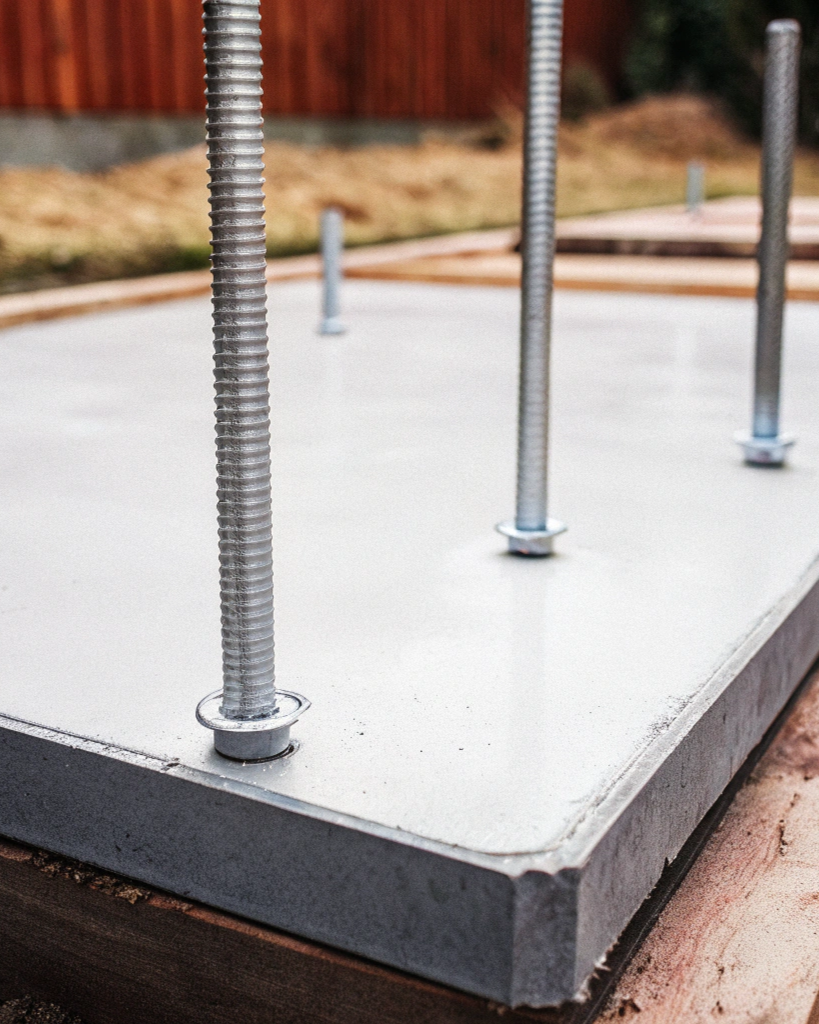
Anchor points keep your shed fixed to the concrete base during Newcastle’s coastal winds and storm events that would otherwise lift or shift an unsecured structure. We install either galvanised anchor bolts cast into the wet concrete or chemical anchors drilled and fixed after curing, depending on your shed manufacturer’s specifications.
Most shed frames require anchors every 1.2-1.5 metres around the perimeter, positioned to line up with the frame base channels or floor rails. We mark anchor positions from your shed plans before pouring, so everything aligns perfectly when you’re ready to bolt down.
Chemical anchors work better when you’re not certain of exact positions until the shed arrives onsite. Cast-in bolts give stronger holding power for larger sheds or high-wind locations but need precise positioning during the pour. We’ll recommend the fixing method that suits your shed type and site exposure.

Slab Thickness for Different Shed Types
Standard 100mm thickness handles most garden sheds, light storage, and residential workshop applications across Newcastle properties. This specification suits sheds storing lawn equipment, tools, bicycles, and general household items without heavy point loads.
We increase to 125-150mm thickness for workshops housing machinery, vehicle storage, or where you’re operating equipment that creates vibration or concentrated loads. Mechanic workshops, woodworking spaces with heavy bench-mounted tools, and sheds storing ride-on mowers or small tractors need this extra concrete depth.
Farm sheds and machinery storage often require 150-200mm slabs, depending on what you’re parking inside. Tractors, harvesters, and heavy agricultural equipment create point loads that crack thinner concrete over time.
We’ll calculate the right thickness based on your planned shed usage and the heaviest equipment you’ll store. Under-specifying slab thickness costs more to repair than getting it right initially, so we factor in your actual loads rather than minimum standards.
Getting Your Shed Measurements Right
Getting your shed slab measurements spot-on before we pour makes everything else straightforward. We work from your shed manufacturer’s floor plan dimensions, then factor in the details that many property owners miss until it’s too late.
Your slab needs to account for:
- Eave overhang beyond the floor perimeter – most sheds extend 200-400mm past the base on all sides
- Door swing clearance – roller doors and hinged doors need different space considerations
- Access pathways – room to walk around the shed with equipment or materials
- Future expansion possibilities – extra width now saves major costs if you extend later
- Site positioning – solar access, prevailing winds, distance from boundaries
We’ll measure from your shed plans and advise on the optimal slab size for your specific setup. A garden shed sitting tight to your boundary fence needs different planning than a workshop with vehicle access on three sides.
Bring your shed plans or manufacturer specs when we quote, and we’ll confirm the exact dimensions that work for your property layout and council setback requirements.
Drainage Solutions Around Your Shed Base
Proper drainage around your shed slab prevents water pooling against the concrete, undermining the base edges, and creating damp conditions that rust stored equipment. We grade the surrounding area so water flows away from your slab on all sides, typically creating a subtle 1-2% fall across the first metre.
Newcastle’s rainfall patterns mean drainage planning matters more than in drier regions. Properties on clay soils hold water longer, so we often recommend installing agricultural drainage around larger shed slabs or positioning the base slightly higher than the surrounding ground level.
The slab itself gets a minimal fall to one edge—just enough to prevent water from sitting on the surface without affecting your shed’s level installation. For sheds in low-lying areas or properties with poor natural drainage, we’ll discuss options like French drains, gravel surrounds, or raised base construction that keeps everything dry year-round, regardless of Newcastle’s wettest winter months.
Timing and Curing for Shed Construction
Concrete needs proper curing time before you start bolting down shed frames or loading the slab with construction materials. We recommend waiting a minimum of seven days after pouring before starting shed assembly, though full strength develops over 28 days for slabs carrying heavy loads.
Newcastle’s climate affects curing times:
- Summer pours – hot conditions can cause surface cracking if we don’t keep the concrete moist during initial curing
- Winter pours – cooler temperatures slow curing, but reduce cracking risk
- Coastal humidity – helps maintain moisture in the concrete during the critical first week
We’ll tell you exactly when your slab’s ready for construction based on weather conditions during the pour. Most garden sheds can go up after seven days. Heavy workshop equipment should wait closer to 14 days. Farm machinery storage gets the full 28-day cure before parking tractors or harvesters on fresh concrete.
The waiting period gives you time to organise shed delivery, prepare your building materials, and line up any trades you need for electrical or plumbing connections once the structure’s up.
Frequently Asked Questions
Pricing depends on slab size, thickness requirements, site access, and preparation needed. A standard 3x3m garden shed base differs from a 6x9m workshop slab. We’ll quote after seeing your site and understanding what you’re building on the concrete.
Yes, sloping sites just need more excavation and preparation work to create a level base. We’ll cut into the slope, build up the low side, and compact everything properly. Many Newcastle properties have slope, so we handle this regularly across the region.
Wait a minimum of seven days for light garden sheds, two weeks for workshop construction, and four weeks before parking heavy machinery. Newcastle’s weather affects curing times—we’ll give you the specific timeline based on conditions during your pour and your shed’s intended use.
If your old slab’s cracked, settled, or the wrong size, we’ll break it out and remove the concrete before preparing the site properly. Sometimes we can pour over existing concrete if it’s level and sound, saving you demolition costs. We’ll assess what’s there and recommend the best approach.
Light rain after the concrete’s finished and cured for a few hours won’t damage anything. Heavy rain during the pour means we’ll reschedule. We watch Newcastle’s weather forecasts closely and time pours for clear conditions. Once concrete’s set, rain actually helps the curing process during the first week.
Get Your Free Shed Slab Quote
We’ll come out to your Newcastle property, assess your site conditions, measure for your shed specifications, and give you a straightforward quote that covers everything from excavation through to anchor points. No hidden costs, no pressure, just honest pricing based on what your shed base actually needs.
Call us today to discuss your shed project. We’ll talk through your requirements, answer your questions about site preparation and council requirements, and schedule a time that works around your plans. Getting your concrete base right makes everything else easier when you’re ready to put up your shed or workshop across the Hunter region.
