
Why Professional House Slabs Matter
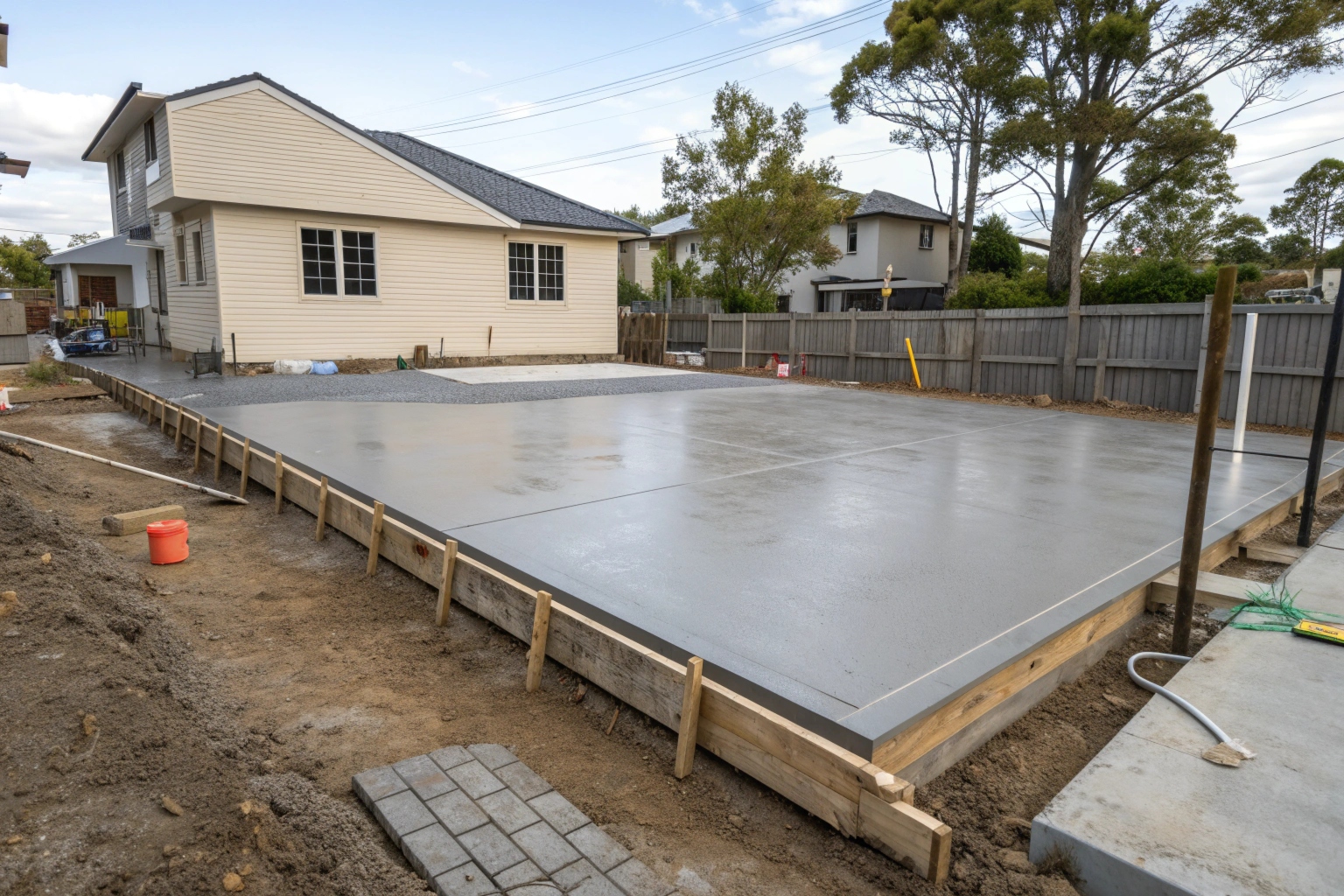
Your house slab carries the entire weight of your home and determines how well the structure handles Newcastle’s soil movement over time. Get the slab wrong, and you’re looking at cracked walls, sticking doors, and structural problems that cost tens of thousands to repair later.
We engineer house slabs to match your specific soil classification because Newcastle’s ground conditions vary significantly from suburb to suburb. The Class H reactive clay in Kotara requires different engineering than the Class A sand soils near our beaches. Your slab design must respond to what’s underneath it – that’s why we start with your geotechnical report and work directly to your structural engineer’s specifications.
Newcastle’s reactive clay soils expand when wet and contract during dry periods. A properly engineered house slab accommodates this movement without transferring stress to your home’s frame and finishes. We incorporate the right beam depths, reinforcement patterns, and void formers for your site conditions.
Every house slab we install includes integrated termite protection systems – physical barriers or chemical treatments that meet AS3660 standards. We coordinate council inspections at the critical stages: after formwork and reinforcement placement, before the concrete pour. Your engineer reviews our work to confirm the slab matches their design specifications.
Professional house slab construction protects your biggest investment. We handle Newcastle’s soil challenges with engineered solutions that prevent the structural problems we see in poorly constructed slabs throughout the region.

House Slab Types
Waffle Pod Slabs
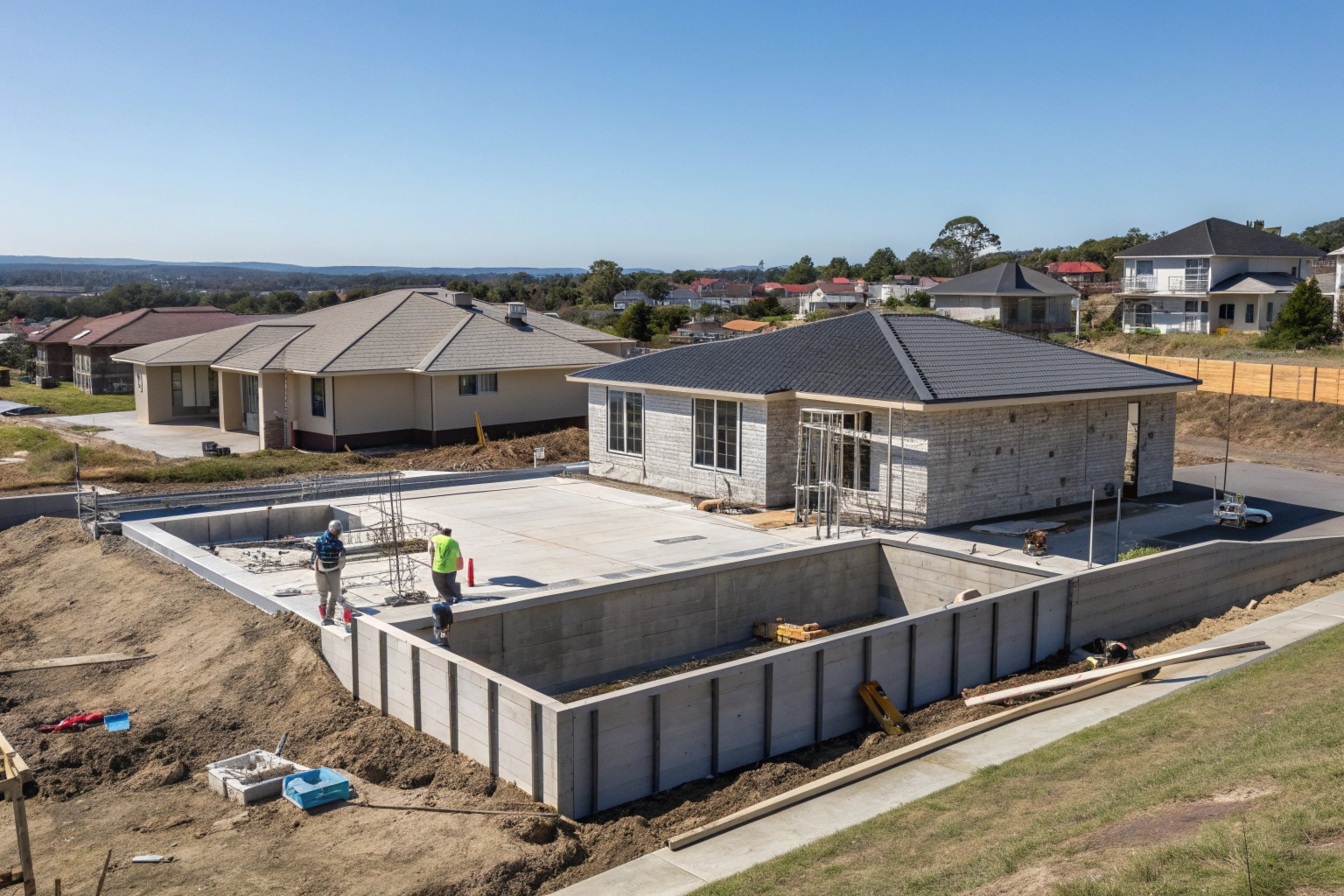
Waffle pod slabs handle Newcastle’s reactive clay soils better than any other system – that’s why we install them on most residential sites throughout Charlestown, Warners Bay, Kotara, and similar Class M and H soil areas. The polystyrene void formers sit beneath the slab, creating air gaps that let the ground move without transferring force up into your concrete.
We build waffle pod slabs with perimeter edge beams and internal stiffening beams running through the floor plan. The reinforcing mesh spans across the top of the pods, and the concrete fills around them to create an engineered beam and slab system. This gives you the strength where you need it while reducing the concrete’s direct contact with reactive soil underneath.
Stiffened Raft Slabs
Raft slabs work for Newcastle’s moderate to highly reactive soils when your engineer specifies extra load distribution. We pour a reinforced concrete raft with deeper perimeter beams and internal stiffening beams that spread your home’s weight across a larger ground area. These slabs perform well in Newcastle’s clay soil suburbs where soil movement needs managing across the full footprint.
Conventional Reinforced Slabs
Conventional slabs suit Newcastle’s stable, non-reactive Class A and Class S soils – typically our coastal sand locations. These are simpler slabs without void formers, just reinforced concrete poured over compacted ground with a vapour barrier underneath. We see these less often in Newcastle because most of our suburbs sit on reactive clay.
Engineering & Compliance
Every house slab we build in Newcastle starts with your geotechnical soil report and structural engineer’s design. The soil report classifies your site – Class A through Class H – and identifies the reactive soil characteristics that determine which slab system you need. Your engineer then designs to AS2870 standards, specifying beam depths, reinforcement patterns, and construction requirements for your specific ground conditions.
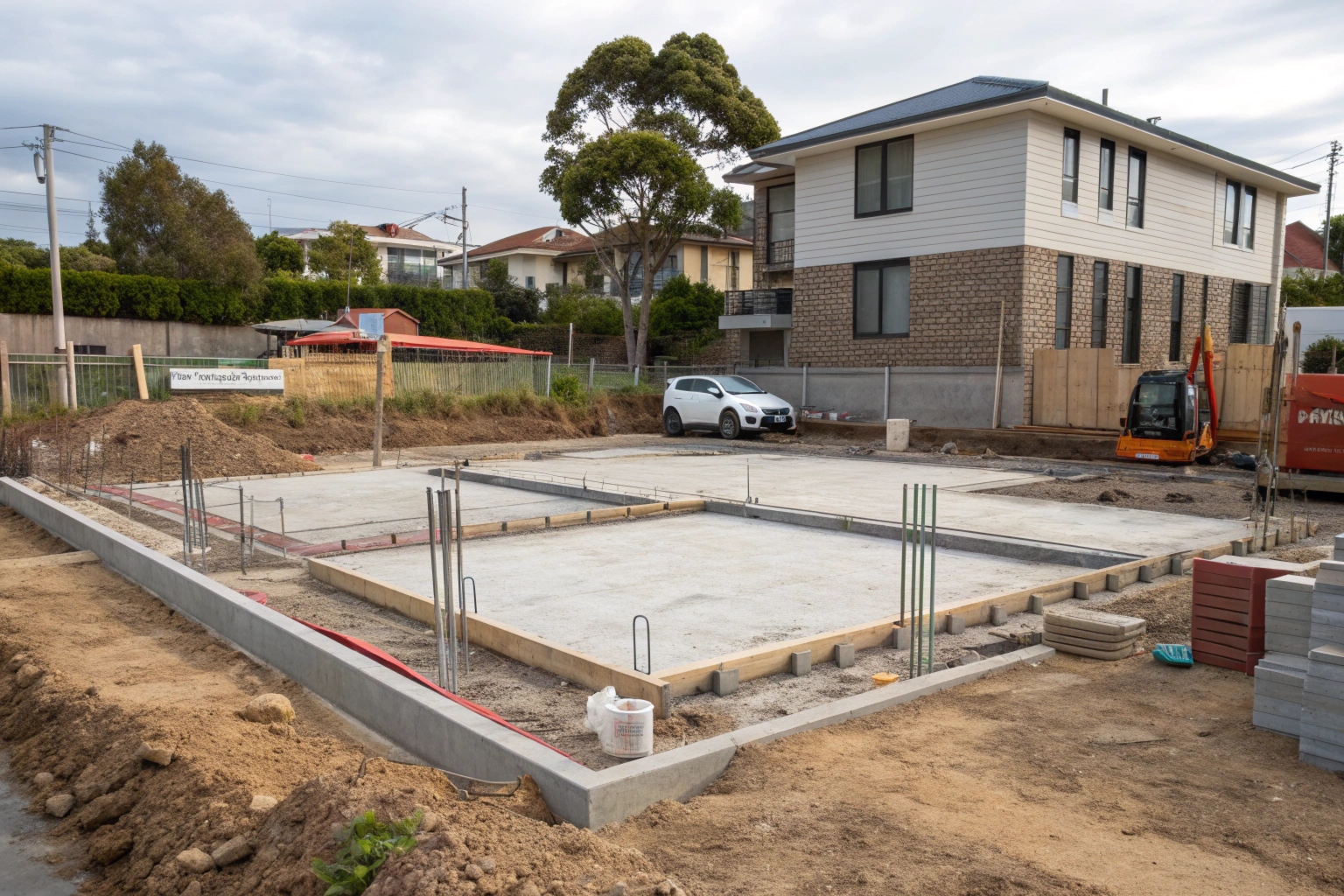
We follow the engineer’s specifications exactly. Reinforcement placement, mesh overlap, bar spacing, and concrete strength all match what’s documented in your structural drawings. Our formwork establishes the correct slab levels, set-downs for garage and alfresco areas, and edge beam depths before any concrete arrives on site.
Newcastle council requires inspections at critical stages of your house slab construction. We coordinate these inspections after formwork and reinforcement installation, before the concrete pour. Your engineer also inspects to certify the work matches their design. The surveyor confirms we’ve set correct levels and placed the slab accurately on your site boundaries.
Termite barriers go in before we pour concrete – physical sheet systems or chemical treatment zones that comply with AS3660. We install these around the slab perimeter and through penetrations where plumbing and services enter your home.
Plumbing rough-ins, electrical conduits, and anchor bolts all get positioned during slab construction. We coordinate with your builder and trades to make sure everything that needs embedding in the concrete gets placed correctly before the pour.
Our House Slab Process
We start by reviewing your structural engineer’s plans and geotechnical soil report. This tells us the slab type, beam depths, reinforcement requirements, and site-specific construction details for your Newcastle property.
Service Areas
We install house slabs throughout Newcastle, Lake Macquarie, Maitland, and across the broader Hunter region. Our crews work in Newcastle’s western suburbs like New Lambton, Adamstown, and Kotara where Class M and H reactive clay soils are common. We handle coastal sites in Merewether, Bar Beach, and The Junction where sand soils offer more stable ground conditions.
Lake Macquarie house slabs make up a significant portion of our work – Warners Bay, Charlestown, Belmont, and Caves Beach all have their own soil characteristics that we’ve engineered slabs for over the years. We know which Lake Macquarie suburbs need waffle pod systems and where conventional slabs work.
Maitland and the Hunter Valley present different ground conditions again. We’ve poured house slabs in Rutherford, Aberglasslyn, and throughout the Maitland growth corridor where soil reports guide our slab selection for each development site.
Every Newcastle region has specific soil behaviour. We’ve worked across enough local sites to understand how ground conditions change from the coast inland, which suburbs typically show Class H classifications, and where drainage becomes critical for slab performance. Your house slab benefits from contractors who know Newcastle’s soil patterns and engineer slabs accordingly.
Frequently Asked Questions About House Slabs in Newcastle
Most Newcastle clay soil sites require waffle pod slabs engineered for Class M or H reactive soils. Your geotechnical report and structural engineer determine the exact slab type needed for your specific property and soil classification.
House slab costs vary with soil classification, slab type, home size, and site conditions. Waffle pod slabs for reactive clay sites typically cost more than conventional slabs for stable soils. We provide detailed quotes after reviewing your engineer’s plans.
House slab construction typically takes 7-14 days from site preparation through concrete pour, plus curing time before frame construction begins. Timeline depends on your slab size, complexity, weather conditions, and inspection scheduling with council and engineers.
Yes. Newcastle requires geotechnical soil reports that classify your site and determine slab engineering requirements. Your structural engineer uses this report to design the house slab system appropriate for your specific ground conditions and soil reactivity.
Waffle pod slabs use void formers beneath the concrete to manage reactive soil movement. Raft slabs are solid reinforced concrete with deep beams that distribute loads across larger areas. Both handle Newcastle’s clay soils but suit different site classifications.
We guarantee our workmanship and that construction matches your engineer’s specifications. The slab performance depends on proper engineering for your soil type, correct installation, and adequate site drainage. Engineers certify designs meet AS2870 structural standards.
We pour house slabs year-round in Newcastle with weather-appropriate concrete mixes and curing protection. Cold weather requires extended curing times. We avoid pouring during heavy rain or when forecasts predict conditions that compromise concrete quality and proper curing.
Minor hairline cracks are normal in concrete. Structural cracks indicate engineering issues, poor soil preparation, or inadequate drainage. Properly engineered Newcastle house slabs built to AS2870 for your specific soil classification prevent structural cracking when site drainage is maintained.
Get Your House Slab Quote Today
We’re ready to quote your Newcastle house slab project. Whether you’re building in Charlestown’s clay soils, on coastal sand sites, or anywhere across Lake Macquarie and Maitland, we engineer and install house slabs that match your site conditions and structural requirements.
Our quotes include full scope: site preparation, termite barriers, formwork, reinforcement, plumbing coordination, and the concrete pour itself. We work directly from your engineer’s plans and geotechnical reports to deliver AS2870 compliant house slabs built for Newcastle’s specific soil challenges.
Contact us for a detailed house slab quote. Licensed, insured contractors with the engineering knowledge and local experience your new home foundation deserves.
