
Why Choose Our Concrete Slabs
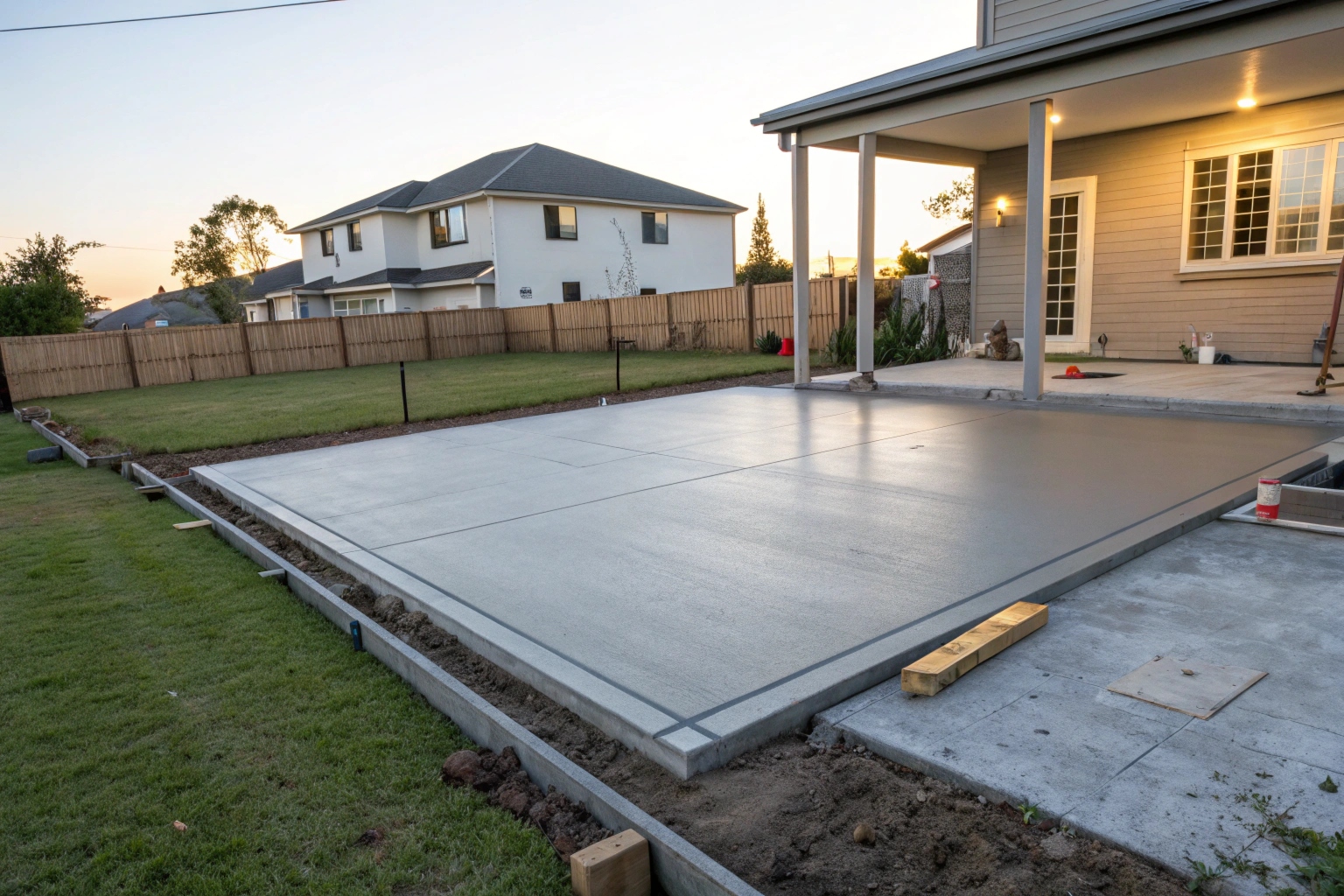
There’s no shortage of concreters in Newcastle. But there’s a big difference between someone who pours slabs and someone who engineers them properly for the ground they’re sitting on.
Here’s what sets our slab work apart:
Engineered to Australian Standards Every slab we pour meets AS2870 residential slab and footing requirements, along with any engineer or council specifications relevant to your site. No guesswork, no shortcuts.
Experience with Newcastle’s Soil Types We work across clay, sand, and rock profiles throughout the region. That means the right slab design for your specific block — not a one-size-fits-all approach that causes problems down the track.
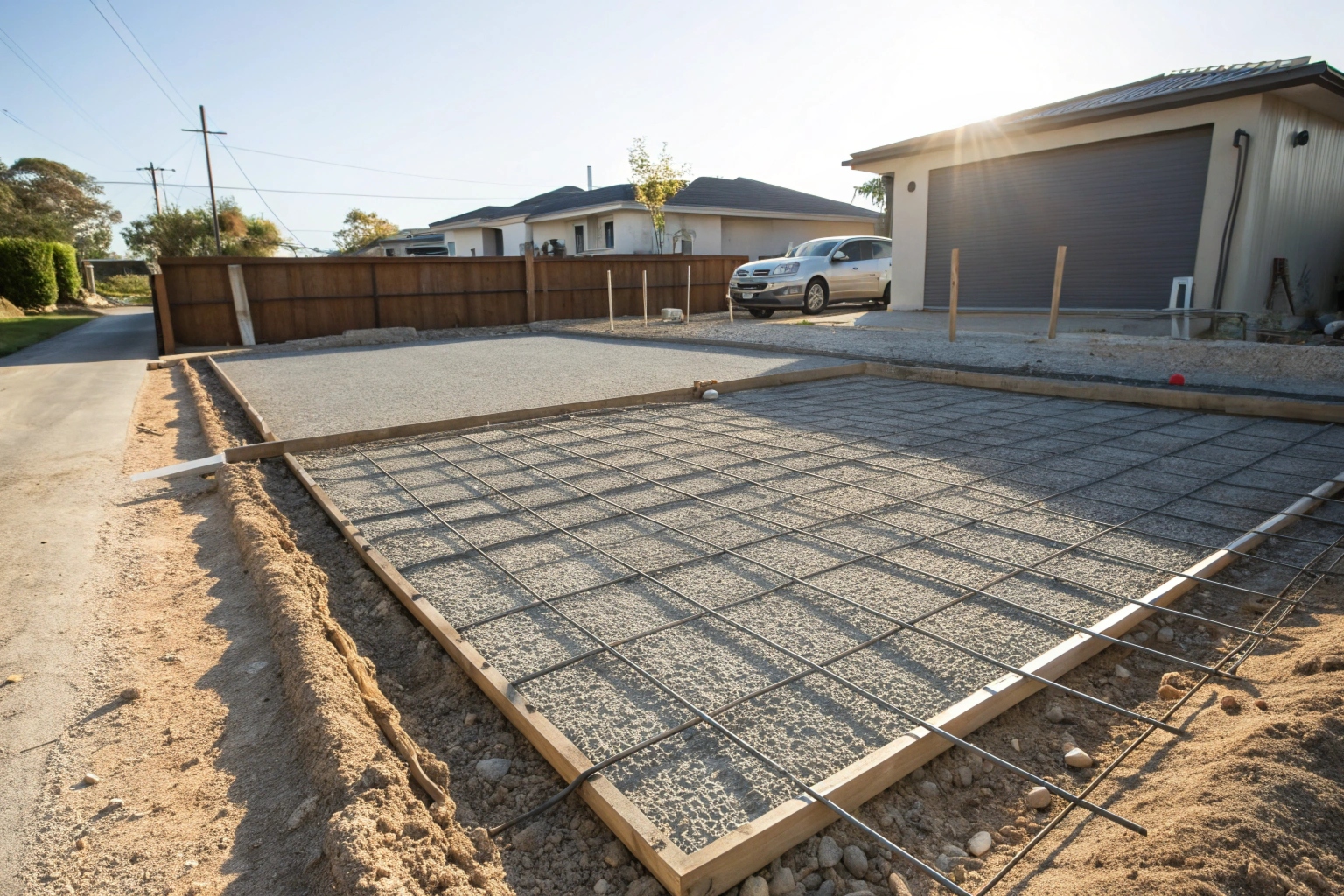
Proper Reinforcement for Long-Term Durability Reinforced mesh, steel bar placement, and correct concrete grade selection all factor into how your slab performs over decades — not just on the day it’s poured.
Licensed and Insured Slab Contractors Our team holds full licensing and insurance for residential and commercial slab work. You’re protected from day one.
Quality Control Throughout Installation From base compaction through to final levels and finish, every stage gets checked. We don’t move forward until the previous step is right.
Council and Engineer-Approved Methods Where engineer certification is required — particularly for house slabs and reactive soil sites — we coordinate that process and make sure your documentation is in order before work begins.
Getting these fundamentals right isn’t just about compliance. It’s about building something that holds up for the next thirty years without costing you another dollar.

Concrete Slab Types
Different projects need different slab designs. Here’s a breakdown of what we install and what goes into each one.
House Slabs
A house slab is the most technically demanding pour we do, and Newcastle’s reactive clay soils make getting it right even more critical. We install:
• Waffle pod slabs — the most common choice for Newcastle conditions, sitting above ground level and allowing for soil movement beneath
• Stiffened raft slabs — where soil classification and site conditions call for additional rigidity
• Conventional reinforced slabs — suited to sites with stable, well-drained profiles
Every house slab is engineered to your site’s soil classification, includes termite protection systems where required, and is fully compliant with Newcastle council requirements.
Garage and Carport Slabs
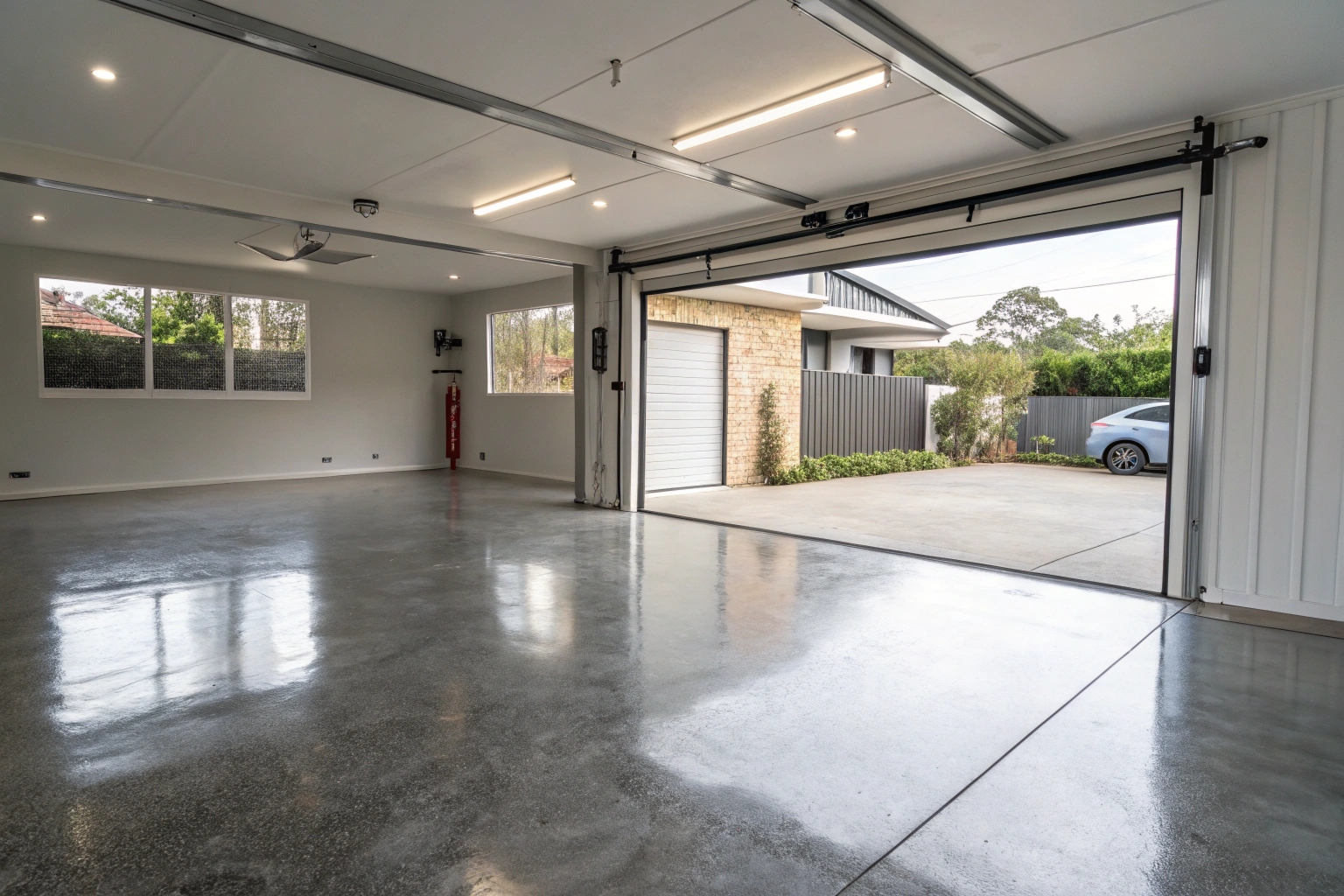
A garage slab needs to handle real vehicle loads day after day. We pour to proper thickness specifications for car and SUV weight, use reinforced mesh or steel bar throughout, and can finish with oil-resistant surface treatments. Where your garage slab meets an existing driveway, we handle that integration cleanly.
Shed and Workshop Slabs
Whether it’s a small garden shed or a full workshop setup, we size and engineer shed slabs for the equipment loads going inside them. Base preparation, anchor point installation, and square, level construction are standard — not optional extras.
General Purpose Slabs
Patio bases, entertainment areas, storage slabs, equipment pads, and hardstand areas all fall under this category. Functional, properly prepared, and built to last.
Slab Construction Process
A well-built slab isn’t just about the pour. What happens before the concrete truck arrives is what separates a slab that lasts decades from one that gives you grief inside a few years.
Here’s how we approach every job:
Site Assessment and Soil Testing
We start by understanding what’s underneath. Soil type, drainage patterns, and site levels all influence the slab design before any work begins. For house slabs and reactive soil sites, we coordinate geotechnical reports and engineer specifications as needed.
Excavation and Base Preparation
Once the design is confirmed, we excavate to the correct depth and compact the sub-base to specification. Skipping proper compaction is one of the most common reasons slabs crack — we don’t cut corners here.
Vapour Barrier and Termite Protection
Moisture barriers go down before reinforcement on enclosed slabs. Where the site requires it — particularly in bushland-adjacent Newcastle suburbs — termite barrier systems are installed to Australian Standards at this stage.
Reinforcement Placement
Steel mesh or bar reinforcement is positioned and supported at the correct height within the slab profile. Proper placement is what gives the concrete its structural performance — sitting it on the ground defeats the purpose entirely.
Concrete Pour and Finishing
We pour to the engineered specification — correct grade, correct slump, correct thickness — and finish to the level and surface texture your project requires.
Curing Period
Concrete needs time to reach full strength. We manage the curing process properly so your slab performs the way it was designed to.
Newcastle Considerations
Newcastle isn’t a one-soil city. The ground conditions change suburb to suburb, and that has a direct impact on how your slab needs to be designed and built.
Service Areas
We install concrete slabs across Newcastle and the broader Hunter region, working on residential and commercial projects of all sizes. If you’re based anywhere in the following areas, we can help:
Newcastle and Surrounds
From the inner suburbs through to the coastal and lakeside areas — including Newcastle CBD, Merewether, Bar Beach, Hamilton, Adamstown, New Lambton, Jesmond, and Kotara — we’re on the ground and familiar with the local soil profiles, council requirements, and certifier expectations throughout.
Lake Macquarie
A significant portion of our slab work runs through Lake Macquarie, covering suburbs like Charlestown, Glendale, Cardiff, Eleebana, Warners Bay, Morisset, and Toronto. Clay soil reactivity is a real factor through much of this area, and we design accordingly.
Maitland and Hunter Valley
We work throughout the Maitland LGA and into the broader Hunter Valley for both residential and commercial slab projects. Rural and semi-rural blocks often come with their own site challenges — variable fill, seasonal drainage issues, and larger footprints — and we have the equipment and experience to handle them.
Port Stephens and Cessnock
Our service area also extends north to Port Stephens and west to Cessnock, covering new estate developments, rural residential builds, and commercial construction across both regions.
If your property sits outside these areas, it’s still worth getting in touch. For the right project, we travel. We’d rather have a conversation and work out whether we’re the right fit than have you go with someone who doesn’t know the local conditions.
Frequently Asked Questions
It depends entirely on what the slab is carrying. A standard residential patio or shed base typically comes in at 100mm. Garage slabs handling regular vehicle loads are generally poured at 100-125mm with reinforcement. House slabs are engineered to a specific thickness based on soil classification and load requirements — there’s no universal answer, and anyone quoting a thickness without looking at your site first is guessing.
For house slabs, yes — engineer certification is standard practice and required under the National Construction Code for Class 1 buildings. For garage, shed, and general-purpose slabs on straightforward sites, an engineer may not be required, but it depends on your soil conditions and council requirements. We’ll advise you on what’s needed once we’ve assessed your site.
Concrete reaches workable strength within 24-48 hours, but full structural strength takes 28 days. We manage the curing process to protect the surface during that period. Light foot traffic is typically fine after a day or two, but vehicle loads and construction activity should wait until the slab has had adequate time to cure properly.
The most common causes are inadequate base compaction, poor drainage, incorrect reinforcement placement, and soil movement — particularly reactive clay expanding and contracting with moisture changes. Slabs can also crack from overloading, premature drying, or poor concrete mix design. Getting the design and preparation right from the start is the most effective way to avoid it.
Fresh concrete and heavy rain don’t mix. Rain can alter the water-cement ratio and compromise surface finish and long-term strength. We monitor conditions and schedule pours accordingly. In Newcastle’s climate, that’s a routine part of how we plan jobs — not something we leave to chance on the day.
Get Your Free Slab Quote
Whether you’re building a new home, adding a garage, setting up a shed, or laying down a hardstand area, getting the slab right from the start is the single most important thing you can do for the structure going on top of it.
We’ve been pouring engineered concrete slabs across Newcastle, Lake Macquarie, Maitland, and the Hunter region long enough to know that no two sites are the same. Clay soil, sandy profiles, rock, reactive ground, bushland locations — we’ve worked across all of it, and we bring that local knowledge to every quote we provide.
What You Get With a Free Quote
• Site assessment and honest advice on what your project actually needs
• Engineering guidance for house slabs and reactive soil sites
• Clear pricing with no hidden costs
• Recommendations on slab type, thickness, and reinforcement suited to your specific block
• A timeline that works around your build schedule
Ready to Get Started?
Call us today or fill in our online quote form and we’ll get back to you promptly. We keep the process straightforward — no sales pressure, no confusing jargon, just practical advice from licensed Newcastle concrete slab contractors who know the local conditions.
If you’ve got plans ready, send them through. If you’re still in the early stages, that’s fine too — we’re happy to walk you through your options before you’ve committed to anything.
Concrete slabs Newcastle — residential and commercial projects done right, from the ground up.
