

Creating Usable Outdoor Space on Hillside Properties
Sloping blocks across Newcastle offer stunning views but limited flat areas for outdoor living. We turn these challenging gradients into functional spaces with strategically placed retaining walls that create level terraces perfect for patios, pools, and entertaining areas. Properties in New Lambton Heights, Charlestown, and Kotara regularly gain 30-50 square metres of usable outdoor space through well-designed retaining systems.
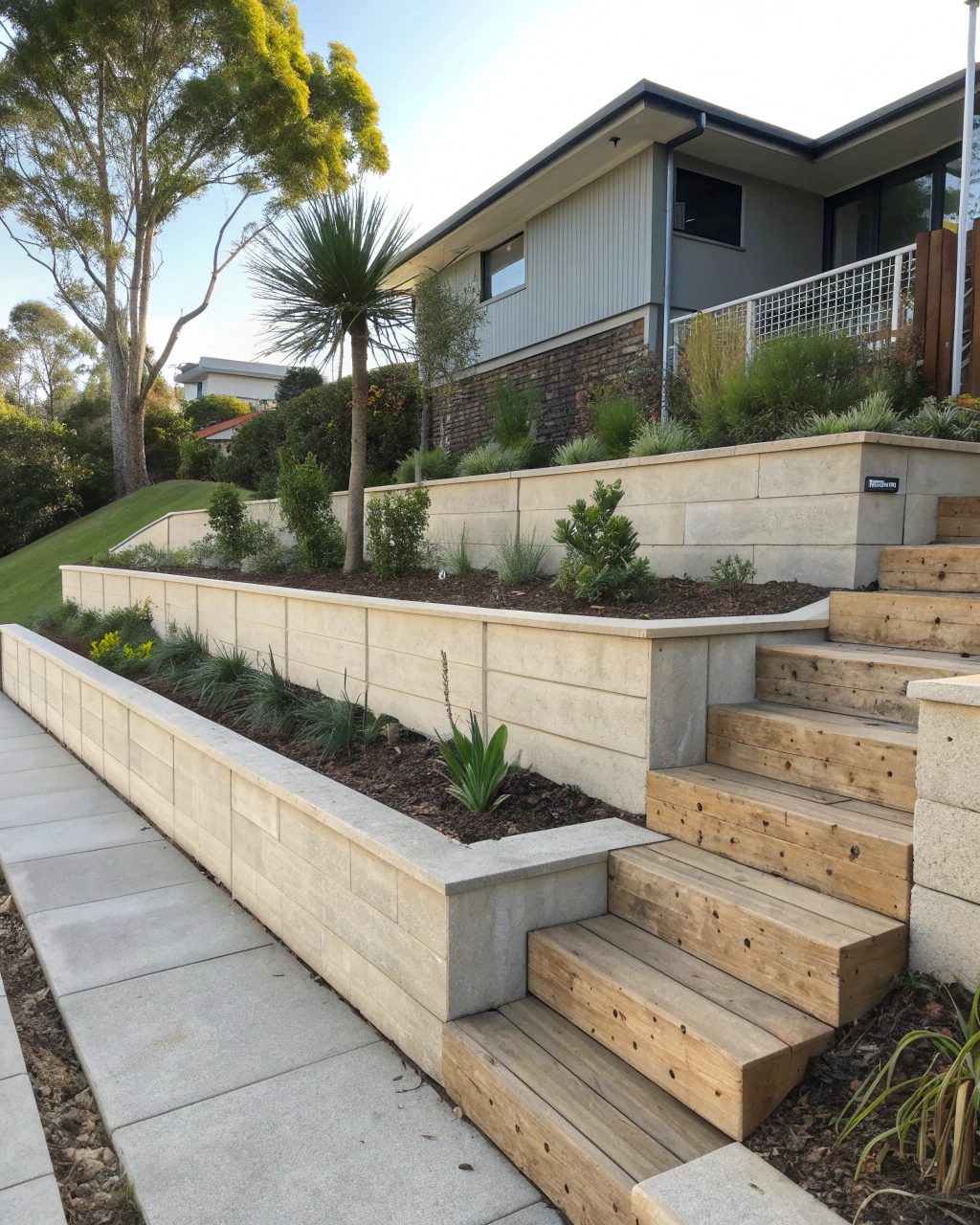
Our terraced wall approach creates multiple levels on steep sites, providing defined garden beds, lawn areas, and hardstand zones. We design retaining structures that maximise your property’s potential while maintaining natural drainage flow and protecting existing vegetation where possible. Each level gets engineered for safe access, with proper steps or pathways integrated into the overall design. The result is an outdoor space that works with your lifestyle, whether that’s a BBQ area, a children’s play zone, or simply expanding your backyard beyond the back door.

Newcastle’s Hillside Suburbs and Retaining Wall Solutions
Merewether, Hamilton South, Adamstown Heights, and New Lambton Heights sit on some of Newcastle’s most elevated terrain, where retaining walls aren’t optional extras but essential structures for property functionality. We work extensively across these hillside suburbs where blocks often drop 3-5 metres from street to rear boundary, requiring engineered retaining systems to create accessible yards and prevent land movement.
Properties in Charlestown, Kotara, and Wallsend’s elevated sections regularly need retaining walls for driveway access, level lawn areas, and boundary stabilisation. The geology across these suburbs varies significantly – some areas have reactive clay soils requiring deeper footings, while coastal suburbs like Merewether deal with sandy conditions and higher drainage demands. We assess each site individually, understanding that a retaining wall in Bar Beach faces different challenges than one in Jesmond. Our local experience means we know what works in your specific suburb and design accordingly.
Common Retaining Wall Applications Across Newcastle
| Property Leveling | Access & Driveways | Landscaping & Gardens |
|---|---|---|
| Creating flat yards on sloping blocks | Supporting driveway cuts into hillsides | Tiered garden bed systems |
| Level areas for pools and entertaining | Retaining for level garage access | Raised planting areas |
| Terraced outdoor living zones | Street-to-house level transitions | Feature walls with integrated seating |
| Basement and undercroft excavation support | Carport and parking bay retaining | Separating lawn from garden zones |
| Boundary walls between properties at different levels | Preventing driveway erosion and washout | Pool excavation and surround walls |
Concrete Retaining Wall Finish Options
Concrete retaining walls don’t need to look like industrial barriers across your property. We offer multiple finish options that complement Newcastle homes while maintaining structural integrity. Rendered finishes give you smooth, paintable surfaces that blend with house colours and garden aesthetics – popular in Hamilton and Merewether,r where coastal homes favour clean, contemporary looks.
Exposed aggregate finishes reveal natural stone textures, ideal for properties in leafy suburbs like Adamstown Heights and New Lambton, where natural materials suit the surroundings. Off-form concrete creates textured patterns from timber formwork, adding visual interest to large retaining structures. Painted finishes let you match existing features or create feature walls in outdoor entertainment areas.
Capping options include rendered tops, tiled finishes, or timber sleeper caps for seating ledges. Face treatments can incorporate sandblasted patterns, vertical boarding effects, or split-face block appearances. We discuss finish options during your site assessment, showing samples that suit your property’s style and the wall’s function within your outdoor space.
Engineered Retaining Wall Design and Construction
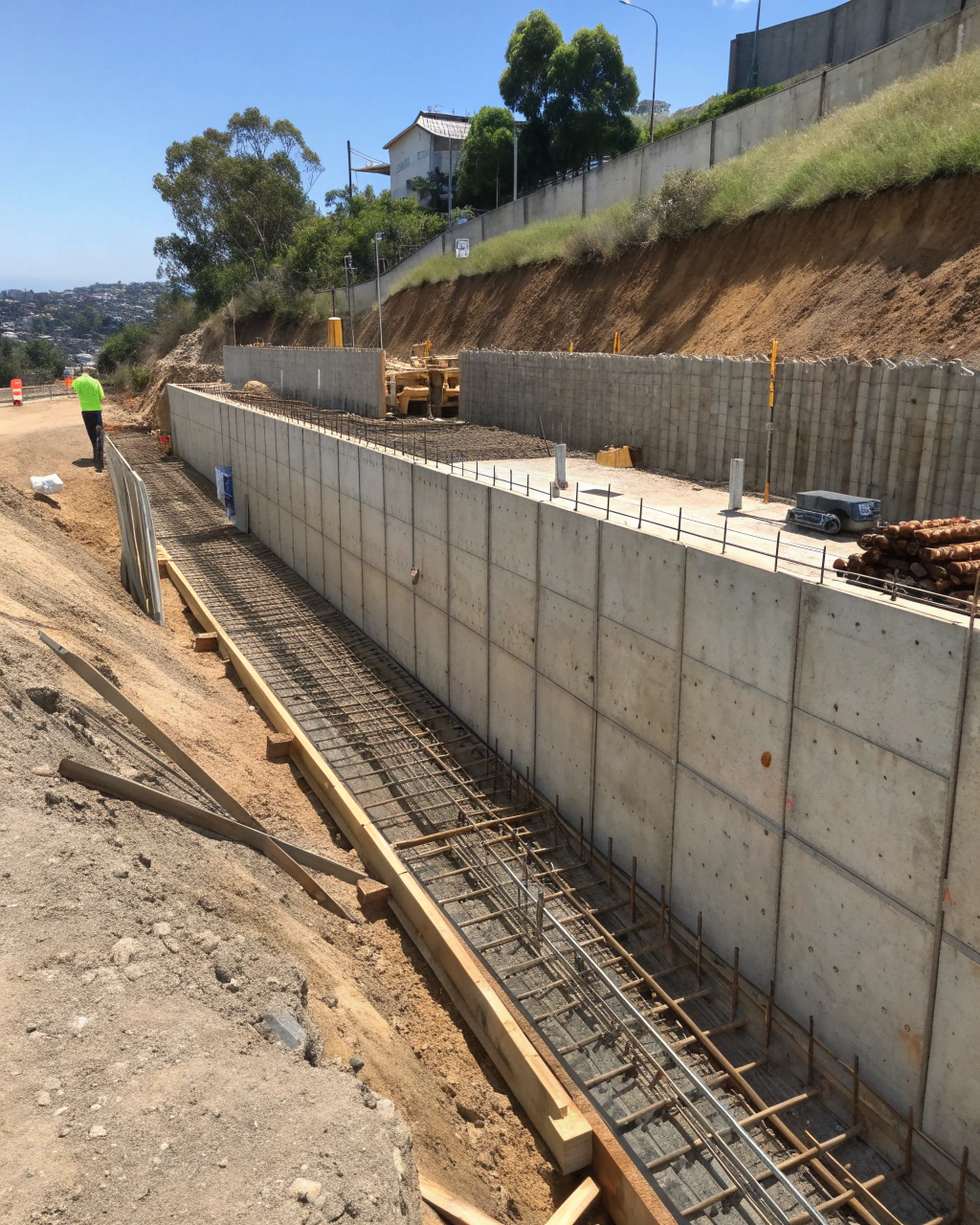
Retaining walls over 1 metre high require structural engineer certification across most of Newcastle, and we work with qualified engineers who design for your specific site conditions. The engineer assesses soil type, slope angle, surcharge loads from driveways or buildings, and water table levels to calculate footing dimensions and reinforcement requirements needed for safe, long-term performance.
Construction starts with excavation to an appropriate depth – often 600mm-1200mm, depending on wall height and soil bearing capacity. Steel reinforcement gets positioned throughout the footing and wall according tothe engineer’s specifications, with proper coverage and tie wire securing everything before concrete placement. We form walls in place for heights over 1 metre, allowing continuous reinforcement and monolithic construction that handles Newcastle’s challenging terrain.
Footings get council inspection before concrete placement, ensuring compliance with AS4678 retaining wall standards. The concrete mix uses appropriate strength grades – typically 25MPa minimum for structural walls. Walls cure for a minimum of 7 days before backfilling, with drainage installation completed and weep holes formed during construction rather than added later.
Reinforced Concrete Construction Methods
We build retaining walls using reinforced concrete construction that handles the enormous pressures from retained soil, water, and surcharge loads. Steel reinforcement runs vertically and horizontally throughout the structure, creating a grid that distributes forces and prevents cracking. The reinforcement extends from footings up through the full wall height, with proper lap lengths at joins and adequate concrete cover protecting steel from moisture.
Our construction process includes:
- Excavating footings to engineer-specified depth and width
- Installing formwork to create the wall shape and finish
- Positioning steel reinforcement with correct spacing and coverage
- Pouring concrete in single placements where possible for monolithic strength
- Vibrating concrete to eliminate air pockets around reinforcement
Walls get stripped after an appropriate curing time, typically 3-7 days, depending on weather and concrete strength. We never rush backfilling – the concrete needs proper cure time to develop full strength before handling soil pressure. Form ties get cut flush and patched for rendered finishes, or left exposed for industrial aesthetics. This methodical approach creates retaining walls that perform structurally for decades across Newcastle’s demanding hillside sites.
Essential Drainage Systems for Newcastle Retaining Walls
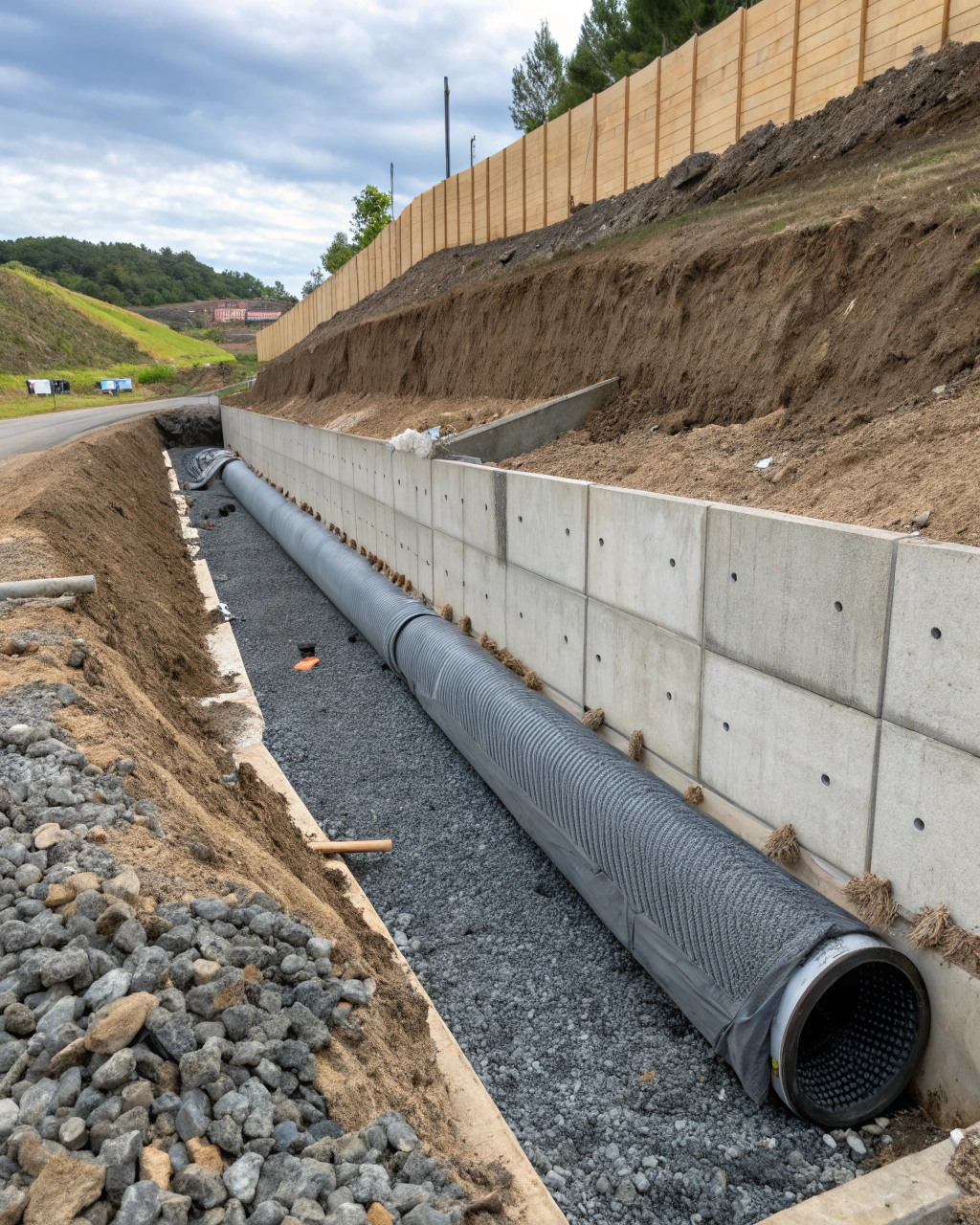
Proper drainage determines whether your retaining wall lasts decades or fails within years. Newcastle’s heavy rainfall events put enormous pressure on retaining structures, with water building up behind walls and creating forces that can crack or collapse poorly drained systems. We install agricultural drainage pipe along the full wall length, wrapped in geotextile fabric to prevent soil from blocking the perforations.
Gravel drainage layers behind the wall – typically 300mm minimum – allow water to flow freely down to the drainage pipe rather than saturating the retained soil. Weep holes at the base, spaced every 1-2 metres, provide visible outlets that confirm drainage is functioning. We use free-draining backfill materials behind the wall, avoiding clay soils that hold water and increase pressure.
The drainage system connects to stormwater or disperses to natural ground at lower levels, never pooling at the wall base. This drainage design prevents hydrostatic pressure buildup that causes wall movement, protects the concrete from constant moisture exposure, and stops soil saturation that leads to slippage on hillside blocks.
Preventing Soil Erosion on Sloping Newcastle Blocks
Uncontrolled water runoff down sloping blocks washes away topsoil, creates gullies, and undermines structures across Newcastle’s hillside properties. Retaining walls stop this erosion by holding soil in place and directing water through controlled drainage systems rather than letting it sheet across the surface. Properties in elevated suburbs lose centimetres of topsoil annually without proper retaining structures, particularly during Newcastle’s heavy rainfall events that can dump 100mm+ in single storms.
Our erosion prevention approach includes:
- Terraced retaining systems that slow water flow down slopes
- Integrated drainage directs runoff to the council stormwater
- Retention of existing vegetation where structurally possible
- Proper backfill materials that don’t wash through the drainage
- Weep hole placement that disperses water safely
The retaining wall acts as the anchor point, with landscaping above and below working together to stabilise soil. Garden beds behind walls get proper drainage, so water doesn’t pool and saturate the soil. The result is stable ground that supports lawns, gardens, and structures without ongoing soil loss. Properties that install retaining walls early avoid the expensive repairs needed when erosion undermines foundations, driveways, or boundary fences.
Frequently Asked Questions About Concrete Retaining Walls
Retaining wall costs vary based on height, length, drainage requirements, and site access. Walls under 1 metre typically cost less as they don’t require engineer certification. We provide detailed quotes after assessing your specific site conditions and structural needs.
Walls over 1 metre high generally require structural engineer design and certification in Newcastle. Lower walls may need engineering if they support driveways, buildings, or have poor soil conditions. We arrange engineer involvement where needed as part of our service.
Boundary retaining walls require council approval and often need neighbour consent when the wall sits on the property line. We handle council applications showing engineer designs, drainage plans, and compliance with setback requirements. Boundary walls need careful legal and structural consideration.
Concrete retaining walls can be rendered and painted, exposed aggregate, off-form textured, or face-patterned. Capping options include rendered tops, tiles, or timber. We match finishes to your property style while maintaining the structural integrity needed for slope retention.
Properly designed retaining walls with drainage systems control water flow and prevent soil saturation that causes water issues. The agricultural pipe and weep holes direct groundwater away from structures. Drainage design is critical for hillside properties with basement or undercroft areas.
Free Retaining Wall Quotes with Site Assessment
We provide free quotes for concrete retaining walls throughout Newcastle, including site visits to assess your slope, soil conditions, and drainage requirements. Our assessment identifies the best retaining solution for your property, whether that’s a single wall or terraced system, with engineer involvement where height or conditions require certification.
Contact us for your free retaining wall quote. We explain what’s needed structurally, the finish options available, and realistic timeframes for your project. No obligation quotes include drainage design, council approval requirements, and engineer costs where applicable.
