
Why Foundations Are Critical to Your Building
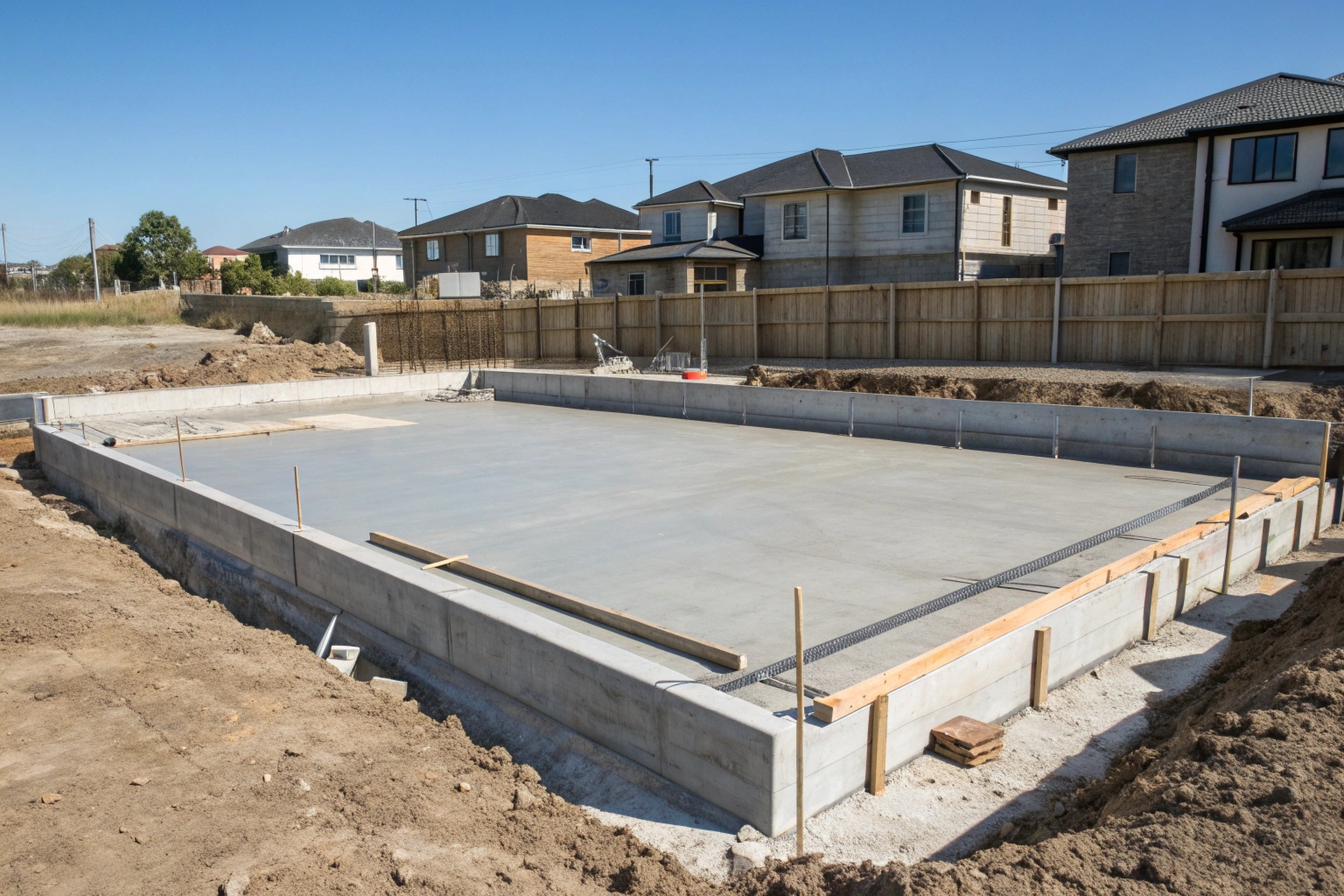
Here’s what a lot of people don’t realise until something goes wrong – your foundation determines everything about how your building performs over its lifetime. It’s not like other construction elements where you can come back and upgrade later. Once the foundation’s in, that’s what you’re working with, and if it wasn’t done right for your soil and load conditions, you’re looking at problems that are expensive and complicated to fix.
A properly engineered foundation prevents structural movement, wall cracking, floor unevenness, and door and window problems. These aren’t just cosmetic issues – they affect your building’s structural integrity and can seriously impact property value. When foundations fail or settle unevenly, you’re talking about tens of thousands in repair costs, and sometimes the fixes are more complicated than the original installation would have been if it was done properly.
That’s why we work with licensed engineers and follow AS2870 specifications for every foundation we install. The engineer looks at your soil test results, building design, and site conditions, then specifies exactly what foundation system you need – footing depths, reinforcement schedules, slab type, drainage requirements, the whole system. We then install it exactly to those specifications because this is structural work that gets inspected by council and needs to support your entire building for decades.
The upfront investment in a properly engineered foundation is actually protecting your much larger investment in the building that sits on top of it. It’s not an area where you want shortcuts or guesswork.

Foundation Systems We Install
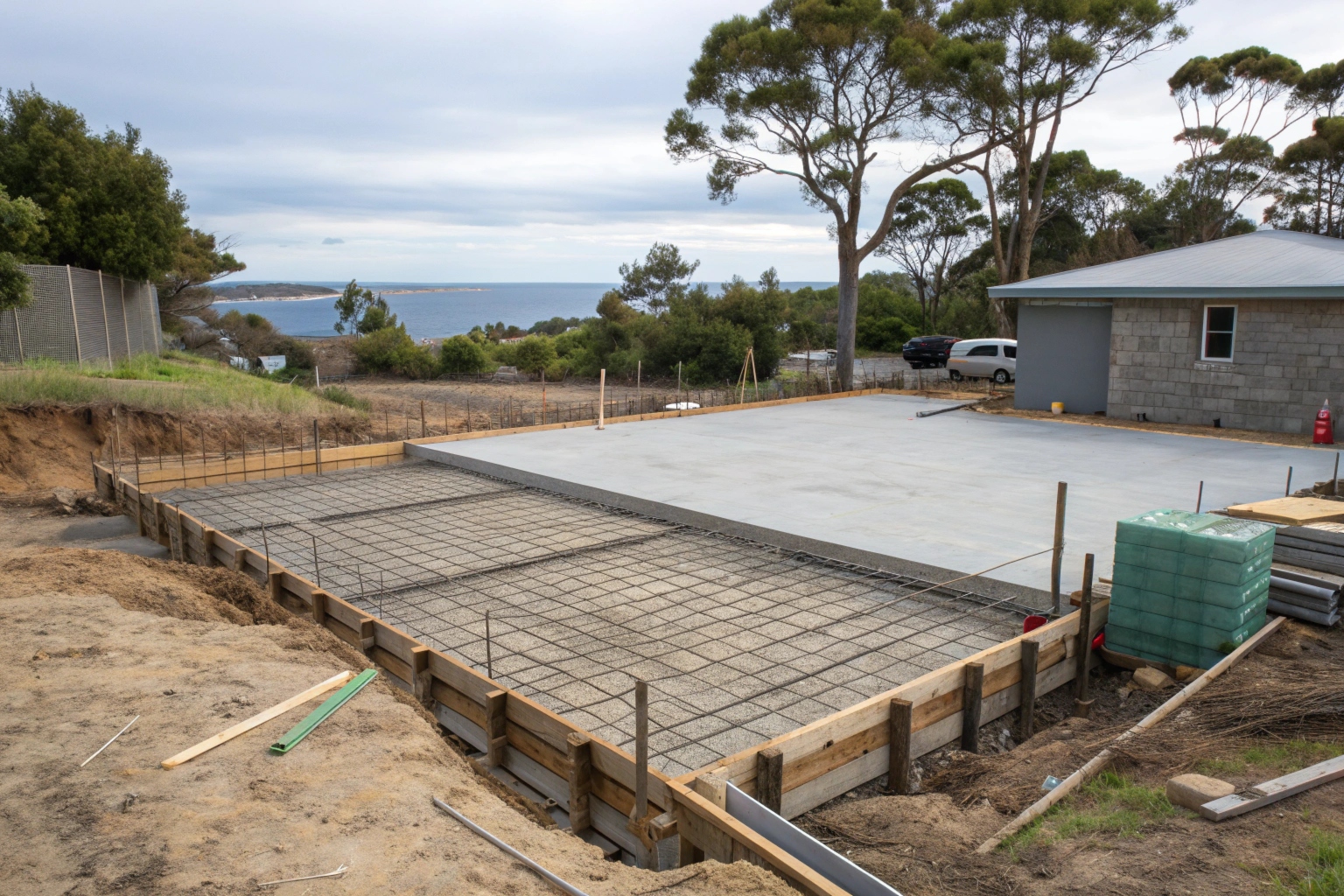
We install complete foundation packages, not just individual components. That means strip footings with house slab systems, pier and beam foundations for elevated builds, raft slab foundations with integrated edge beams, stepped foundations for those sloping Newcastle sites, and commercial foundation systems for larger projects. Each system gets designed specifically for the building loads and soil conditions we’re dealing with.
A complete foundation includes perimeter and load-bearing footings that transfer the building weight down to stable soil, concrete slabs (waffle pod, raft, or conventional depending on engineering), reinforcement throughout the entire system, integrated termite protection, drainage provisions so water moves away from the foundation, and coordinated service penetrations for plumbing and electrical.
We work on all building types – residential new homes, duplex and townhouse foundations, home extensions and additions, garage and granny flat foundations, and commercial building foundations. Each one gets engineered to the specific requirements.
Newcastle Soil Conditions
Newcastle’s got diverse soil conditions depending on where you’re building. We engineer foundations for local soil classifications from Class A to H under AS2870. Reactive clay soils require specific foundation systems with deeper footings and more substantial slabs. Sandstone bedrock shows up in some suburbs which affects excavation. Coastal sand foundations need different approaches in beachside areas. Sloping blocks are common around Newcastle which means stepped footings. Proper drainage is essential for foundation longevity, especially with our weather patterns. And termite barriers are mandatory in most areas, so they get integrated into the foundation system from the start.
Engineering & Soil Considerations
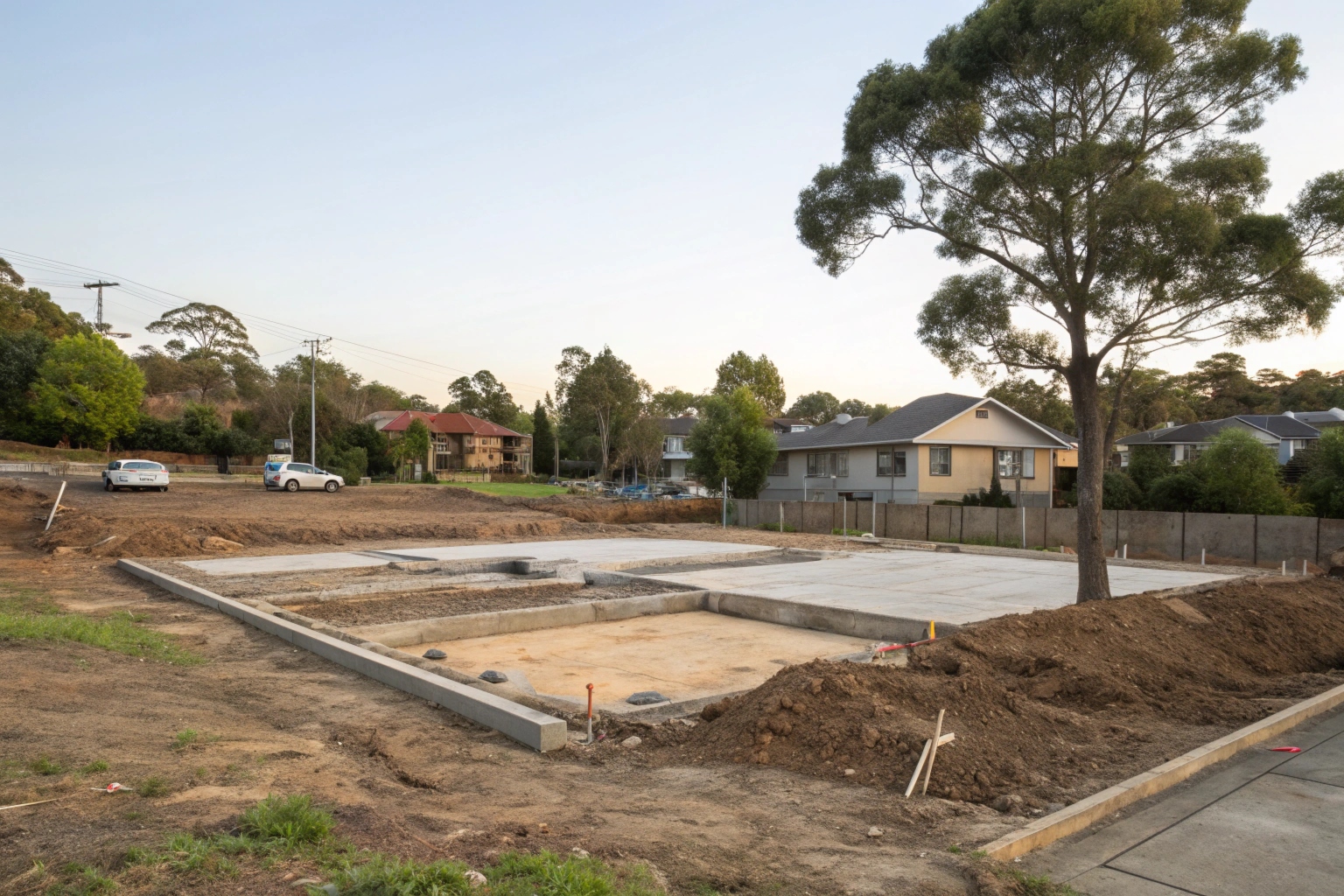
Before we even start excavating, there’s engineering work that needs to happen. Geotechnical soil testing determines what foundation design you need – this isn’t optional, it’s how we figure out what your specific site requires. The engineer takes those soil test results and provides specifications for footings and slabs that match your soil classification and building design.
Your soil classification affects which foundation system works best. Class A sites with stable soil can use simpler systems. Class H reactive clay sites need more substantial footings and slabs. The engineer specifies depth and reinforcement to their plans, and that’s what we install. For sloping sites over 1:10, we use stepped footings that follow the contour while maintaining proper depth below natural ground level.
We also manage hydrostatic pressure – that’s water pressure from below and around the foundation. Newcastle gets decent rainfall, and if water can’t drain away from your foundation, it creates pressure and movement. That’s why drainage provisions are part of the foundation design, not an afterthought.
Everything we install maintains AS2870 compliance throughout construction. The council and engineer inspect at critical stages – after excavation, after footings are formed and reinforced, and before the slab pour. These inspections verify the foundation matches the engineering specifications, because once concrete’s poured, you can’t go back and check what’s underneath.
Our Foundation Process
Service Areas
We install concrete foundations throughout Newcastle and the Hunter region. That includes all Newcastle suburbs – from the beachside areas like Merewether, Bar Beach, and Stockton where we’re dealing with coastal sand conditions, through to the established suburbs like New Lambton, Adamstown, and Kotara with their mix of clay and sandstone, out to the western suburbs like Wallsend, Maryland, and Fletcher.
Lake Macquarie is a big part of our work area – Warners Bay, Belmont, Cardiff, Charlestown, Toronto, and the lakeside communities where foundation design needs to account for proximity to water and soil moisture. We cover Maitland and the Maitland building sites where there’s steady development happening, plus the broader Hunter region developments in areas like Cessnock, Raymond Terrace, and Singleton.
Each area has its own soil characteristics and council requirements. We’re familiar with the local council processes, inspection schedules, and specific requirements for each region. When you’re working with us, you’re dealing with contractors who’ve been installing foundations in these areas and know what works where.
Whether you’re building a new home, adding an extension, or developing a commercial property anywhere in the Newcastle and Hunter region, we provide complete engineered foundation systems installed to AS2870 standards.
Frequently Asked Questions About Concrete Foundations
Foundation costs vary based on building size, soil classification, and system complexity. A typical house foundation ranges from $15,000 to $40,000+ depending on engineering requirements. Reactive soil sites and sloping blocks cost more due to additional excavation and reinforcement needed.
Most residential foundations take 2-4 weeks from excavation to final cure, including inspection hold periods. Commercial projects take longer. Weather affects scheduling – we can’t pour concrete in heavy rain, and proper curing time is critical for structural integrity.
Yes, geotechnical soil testing is required for engineering design. The test determines your soil classification (Class A to H) which dictates what foundation system you need. Without soil testing, engineers can’t design proper foundations, and council won’t approve your plans.
Waffle pod slabs use polystyrene void formers creating a lighter slab with edge and internal beams. Raft slabs are solid concrete throughout. Engineers specify which system suits your soil – reactive sites often require raft slabs for better soil movement resistance and structural performance.
Reactive clay soils expand when wet and shrink when dry, creating movement. These Class H or M sites require deeper footings, thicker slabs, and more reinforcement. The foundation system needs to resist soil movement without cracking. That’s why engineering specific to your site matters.
Minor hairline cracks from concrete shrinkage are normal. Structural cracks from foundation movement indicate problems – usually inadequate design for soil conditions or poor drainage. If cracks widen, doors stick, or floors slope, get an engineer to assess before problems worsen and repairs get expensive.
Yes, all foundations require engineering design to AS2870 standards. The engineer designs footings and slabs based on your soil test, building design, and site conditions. Council requires engineer-stamped plans and inspections throughout construction. This protects you with proper structural design.
Footing depth depends on your soil classification. Stable sites might need 400-600mm depth. Reactive clay sites often require 800mm or deeper. Sloping sites need stepped footings maintaining depth below natural ground level. Your engineer specifies exact depths based on geotechnical testing.
Yes, we install stepped foundations following the site contour. Each step maintains proper footing depth below natural ground level. Sloping sites are common in Newcastle, and stepped footings handle grade changes while providing stable support. Engineering accounts for additional loads on downslope footings.
Most Newcastle areas require physical and chemical termite barriers. Physical barriers are stainless steel mesh or graded stone installed during construction. Chemical barriers are termiticide applied to soil. We integrate both into the foundation system as specified, providing certified protection that meets building code requirements.
Get Your Foundation Quote Today
Your building project starts with the foundation, and getting it right from the beginning saves you from expensive problems down the track. We provide free foundation quotes for Newcastle building projects – residential new builds, extensions, commercial developments, whatever you’re planning.
When you contact us, we’ll review your plans, discuss your site and soil conditions, and provide a detailed quote for the complete foundation system. That includes excavation, footings, slabs, termite barriers, drainage provisions, reinforcement, and all council inspections. You’ll know exactly what’s included and what it costs before we start.
We’re licensed professionals who work with engineers and follow AS2870 standards for every foundation we install. Our experience with Newcastle’s diverse soil conditions means we know what foundation system works for your specific site, and we install it properly the first time.
Whether you’re breaking ground on a new home in Merewether, adding an extension in New Lambton, building a duplex in Lake Macquarie, or developing a commercial property in Maitland, we provide complete engineered foundation systems that give your building the structural support it needs for generations.
Call us today for your free foundation quote. Let’s talk about your project and get your foundation designed and installed right.
