

Concrete Footings Across Newcastle & Hunter Region
We install concrete footings throughout Newcastle, Lake Macquarie, Maitland, and across the Hunter region for residential, commercial, and industrial construction projects. Our teams work across Newcastle suburbs, including Fletcher, Maryland, Charlestown, Kotara, Adamstown, Merewether, and The Junction. We service Lake Macquarie areas from Belmont and Warners Bay through to Toronto and Morisset, handling projects across varied soil conditions from coastal sand profiles to reactive clay sites.
Our coverage extends to Maitland and surrounding growth areas where new housing developments require engineered footing solutions. We understand the specific soil classifications and engineering requirements across different Hunter region locations – from sandstone bedrock areas to high water table sites near lakes and coastal zones. Whether you’re building in established suburbs or new development areas, we bring local knowledge of soil conditions, council requirements, and engineering specifications that impact footing design and installation across the region.

Why Professional Concrete Footings Matter for Newcastle Projects
Concrete footings are the critical structural foundation that supports your entire building, and getting them right prevents settlement, cracking, and structural movement that costs thousands to repair down the track. Every footing we install must comply with engineering specifications based on your site’s soil report – there’s no guessing when it comes to structural foundations. Newcastle’s soil conditions vary dramatically from suburb to suburb, with reactive clay soils, sandstone bedrock, coastal sand, and high water table areas all requiring different footing depths, reinforcement, and engineering approaches.
Professional installation means your footings are engineered to your specific soil classification, whether that’s Class A stable soil or Class H highly reactive clay. We follow engineer specifications exactly, excavate to proper depths in undisturbed soil, place reinforcement to specs, and have everything ready for council and engineer inspections. Licensed installation gives you the quality assurance your project needs, with footings that pass inspections first time and provide structural integrity for the life of your building.
Strip Footings for Extensions & Additions
Strip footings form the perimeter foundation for room additions, garage extensions, and home expansions across Newcastle properties. We install strip footings that match your existing foundation system or work with engineers to design new footing configurations for your extension project.
| Extension Type | Typical Footing Requirements | Newcastle Considerations |
|---|---|---|
| Room Additions | 300-600mm wide strip footings, depth per soil class | Must match existing floor levels, tie into house footings |
| Garage Extensions | Reinforced strip footings, thickened edge for slab | Vehicle load considerations, proper drainage |
| Second Storey Additions | Engineered strip footings or underpinning | Existing foundation assessment, load calculations required |
| Granny Flats | Complete strip footing perimeter, pier footings internal | Separate from main dwelling, full engineering specs |
Every extension footing we install follows the structural engineer’s plans specific to your site’s soil classification. We handle underpinning where required, ensure proper depth in reactive clay areas, and coordinate with engineers and council for inspection points throughout the installation process.
Retaining Wall Footings & Structural Bases
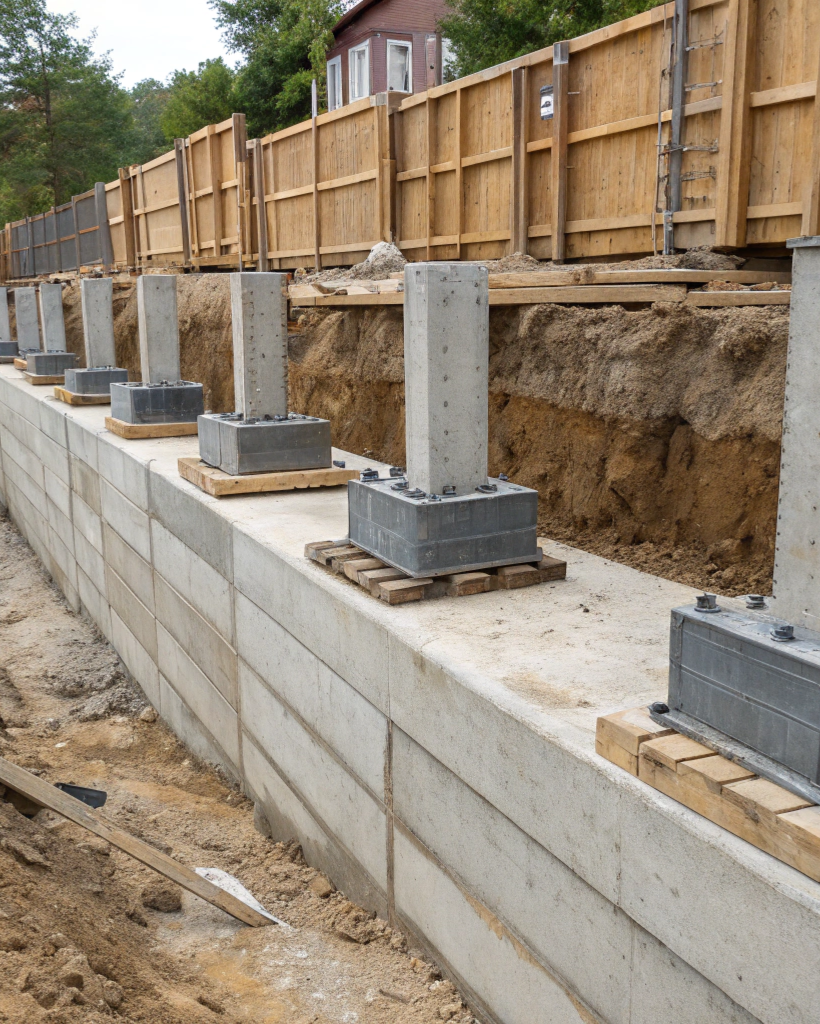
Retaining wall footings provide the structural base that prevents wall failure, tipping, and settlement under soil pressure loads. We install engineered footing bases with depths and dimensions determined by wall height, soil conditions, and lateral pressure calculations from your structural engineer. A 1-metre retaining wall requires completely different footing specifications compared to a 2.5-metre wall, and we follow the engineer’s plans exactly for every installation.
Footing depth typically ranges from 300mm for low walls to 600mm or deeper for higher retaining structures, with width calculated based on overturning moments and bearing pressure. We place reinforcement to engineer specifications, ensure proper drainage behind walls to reduce hydrostatic pressure, and prepare footings for ag-drain installation where specified. Our retaining wall footings across Newcastle handle everything from residential garden walls through to commercial cut-and-fill developments, all engineered for long-term structural performance and council compliance.
House Footings & Residential Foundation Systems
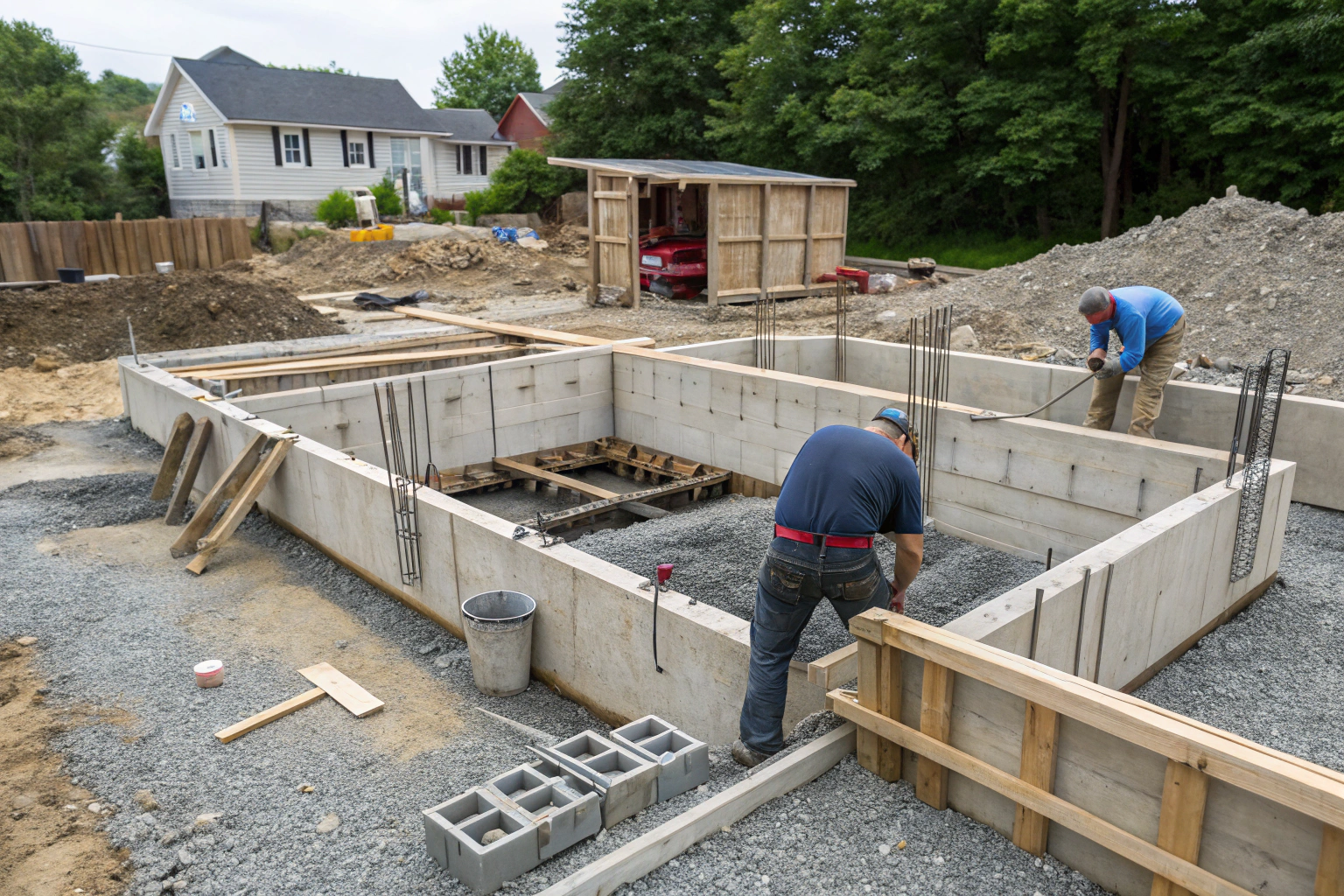
House footings support your home’s entire structural load and must be engineered to Newcastle’s specific soil classifications, ranging from Class A stable soil through to Class H highly reactive clay. We install strip footings for brick veneer construction, pier and beam foundation systems for elevated homes, and raft slab edge footings for concrete slab builds across the region.
Strip footing width and depthvarys dramatically based on your soil report – a house on stable sandstone might need 300mm wide footings at 400mm depth, while reactive clay sites can require 600mm wide footings going 800mm deep or more. We follow the engineer’s specifications exactly for footing dimensions, reinforcement placement, and excavation depths. Every house footing we pour is engineered to your site’s geotechnical report, compliant with AS2870 standards, and ready for council inspections at each stage of your new home construction.
Post & Pier Footings for Various Applications
Post and pier footings support standalone structures, fencing, and equipment installations across residential and commercial properties throughout Newcastle. We pour footings for fence posts, pergolas, carports, decks, and structural steel columns, with sizing engineered to your specific application and load requirements.
Typical post footing installations include:
- Fence post footings at 300mm diameter for standard boundaries
- Pergola and carport footings sized to beam spans and roof loads
- Deck support footings with proper spacing and depth
- Equipment pad footings for pools, pumps, and mechanical systems
- Steel column footings for structural applications
Footing depth varies based on your application and Newcastle soil conditions, with reactive clay areas requiring deeper installations to reach stable soil layers. We ensure proper diameter for post stability, place reinforcement where specified by engineers, and allow adequate curing time before structure installation. Our pier footings handle everything from basic fence supports through to engineered structural columns carrying significant loads, all installed to engineer specifications and ready for building inspector approval.
Structural Integrity & Engineering Expertise
Every concrete footing we install is engineered for structural performance and long-term stability across Newcastle’s varied soil conditions. We work directly from structural engineer plans and geotechnical reports, following AS2870 specifications for residential footings and AS3600 standards for commercial applications. Our team understands soil bearing capacity, footing load calculations, and how Newcastle’s reactive soils impact foundation design.
We don’t cut corners on structural requirements – reinforcement is placed exactly to engineer specifications, excavation reaches proper depths in undisturbed soil, and concrete strength meets project requirements. Our experience includes simple residential footings through to complex commercial foundations, retaining wall bases with significant lateral loads, and underpinning projects requiring detailed engineering solutions.
Working with structural engineers, builders, and council inspectors across hundreds of Newcastle projects means we understand what’s required for compliant installation. Your footings pass inspections the first time because we follow engineering plans exactly, document our work properly, and deliver the structural foundation your building project needs.

Newcastle Soil Conditions & Footing Requirements
Newcastle’s diverse soil profiles mean footing requirements change dramatically across different suburbs and locations throughout the region. We work with soil classifications from stable sandstone areas through to highly reactive clay sites, coastal sand profiles, and high water table zones near Lake Macquarie.
Common Newcastle soil conditions include:
- Reactive clay soils in the western suburbs requiring deeper footings
- Sandstone bedrock in areas like The Hill and Bar Beach
- Coastal sand profiles in beachside suburbs
- Fill sites in new developments needing special consideration
- High water tables in low-lying Lake Macquarie areas
Your geotechnical report classifies your site and determines footing depth, width, and reinforcement requirements. Class A stable soils might need 400mm deep footings, while Class H2 highly reactive clay can require 900mm depths or more to reach stable soil below the moisture variation zone. We adjust our installation approach based on your specific soil classification, ensuring excavation reaches undisturbed material, proper compaction where fill exists, and drainage considerations for high water table sites across the Hunter region.
Frequently Asked Questions
Footing depth depends on your soil classification from the geotechnical report. Stable soils might need 400-500mm depth, while reactive clay sites require 600-900mm or deeper to reach stable soil below the moisture variation zone where seasonal movement occurs.
Footing costs vary based on depth, width, reinforcement requirements, and site access. Simple post footings start around a few hundred dollars, while engineered house footings depend on linear metres, soil classification, and engineering specifications. We provide free quotes for your plans.
Yes, a geotechnical soil report is required for engineered footings. The report classifies your soil, determines footing depth and width, specifies reinforcement requirements, and ensures AS2870 compliance. Engineers design footings based on this soil data for your specific site.
Footings need a minimum of 7 days curing before construction loads, though 28 days achieves full strength. We coordinate timing with your builder and engineer for inspection schedules. Hot weather requires additional curing protection, while cold weather extends curing times across the winter months.
Strip footings are continuous concrete beams running under walls, used for brick veneer and perimeter foundations. Pier footings are isolated columns supporting individual posts or beams, common in elevated homes and post structures. Your engineer specifies which system suits your building design.
Get Your Free Footings Quote Today
We provide free quotes for concrete footings based on your engineering plans and site requirements. Our team reviews your soil report, engineer specifications, and project scope to deliver accurate pricing for your Newcastle construction project. Whether you’re building a new home, adding an extension, installing retaining walls, or need post footings for various applications, we handle the complete installation process from excavation through to final concrete pour.
Contact us to discuss your footing requirements. We service residential and commercial projects throughout Newcastle, Lake Macquarie, Maitland, and the Hunter region with licensed installation and council-inspection-ready workmanship.
